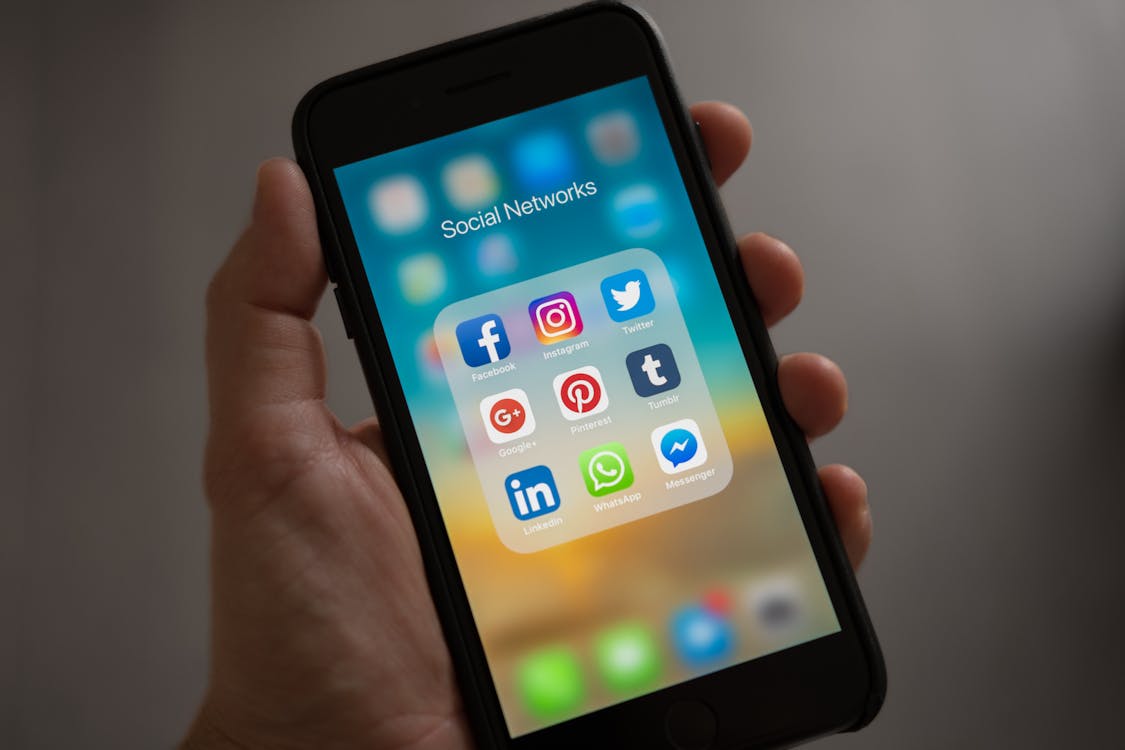
In short: social proof works, but not always and not all types equally. Effectiveness depends on the fit between the type of proof (expert, celebrity, user, wisdom-of-crowd, friends, certification) and the decision context. Asch's classic conformity experiments (1951) and Cialdini's mapping (1984, updated 2021) converge with large-scale replications published in PNAS and the Journal of Consumer Research: average effect sizes between 5% and 30% with high variability and risk of boomerang effects.
- Robert Cialdini, Influence: The Psychology of Persuasion (1984, updated ed. 2021) — six/seven principles including social proof
- Solomon Asch, Effects of group pressure upon the modification and distortion of judgments (1951) — foundational experiments on conformity
- Goldstein, Cialdini, Griskevicius (2008) — Journal of Consumer Research, social norms in hotels
- Schultz et al. (2007) and PNAS replications — boomerang effect and injunctive norms
When a B2B client asks us whether it's worth investing in testimonials, case studies and certification badges, the honest answer is not "yes" or "no": it's it depends on the type. The peer-reviewed literature on social proof — the principle theorised by Robert Cialdini based on Solomon Asch's conformity experiments — shows effect sizes ranging from negligible to dramatic depending on the chosen format and the context in which it is shown.
This article organises the main evidence: what social proof is, which are the six types recognised by the applied literature, what data the scientific experiments report, when social proof does not work (or worse: backfires on the brand) and how to use it without falling into the fluff of unverifiable "10,000 satisfied customers".

What social proof is: operational definition
Social proof is the psychological mechanism whereby, in situations of uncertainty, people tend to consider correct what others do. The term was coined by Robert Cialdini in Influence: The Psychology of Persuasion (1984) and is rooted in the conformity experiments conducted by Solomon Asch in the 1950s, in which about a third of participants accepted a clearly wrong perceptual judgement in order to align with the group.
In technical terms, social proof is a decision heuristic: a cognitive shortcut that reduces the burden of evaluating alternatives in contexts of ambiguity, complexity or low expertise. It is not a bias in the strict sense: it is an adaptive mechanism that can be exploited ethically (by signalling real information about others' behaviour) or abused (by fabricating unverifiable numbers).
The 6 types of social proof
The literature applied to marketing traditionally distinguishes six families of social proof. Each acts on different cognitive mechanisms and responds to different contexts.
- Expert proof: endorsement by recognised experts in the domain (doctors, analysts, certifiers).
- Celebrity proof: endorsements by public figures with general fame.
- User proof: reviews, star ratings, testimonials from real customers.
- Wisdom of the crowd: aggregate numbers ("millions of users", "best-selling", "trending").
- Wisdom of friends: recommendations from people known to the recipient (social graph, referrals).
- Certification: badges, seals and recognitions issued by verifiable third parties.
Table: types of social proof, effect size and peer-reviewed source
The ranges are deliberately wide: each study measures different outcomes (awareness, intent, actual conversion) on different populations. The operational message is that there is no universally superior type: selection must be made based on the recipient's decision context.
The scientific experiments that validate it (and those that limit it)
Four experiments are required reading for anyone who wants to work with social proof without improvising.
1. Asch (1951) — perceptual conformity. Participants placed in a group of agreeing confederates aligned with the group's erroneous judgement in 37% of critical trials, even on unambiguous perceptual stimuli. It is the most cited experimental demonstration of the mechanism Cialdini would later call social proof.
2. Goldstein, Cialdini, Griskevicius (2008), Journal of Consumer Research. In the hotel towel study, a descriptive norm message ("most guests reuse their towels") increased reuse from 35.1% to 49.3%. The effect grew further when the norm was provincial ("the guests in this room"), confirming that social proof works better the more the reference group is perceived as close.
3. Schultz et al. (2007), PNAS replications. Communicating the average energy norm of a neighbourhood lowered consumption among heavy consumers but raised it among virtuous consumers — the famous boomerang effect. The fix: adding an injunctive signal (a smiley face of approval) next to the data. This study is proof that descriptive social proof without an evaluative frame can worsen the desired behaviour.
4. Milgram (1963) — authority, not social proof. It is important not to confuse the two principles. Stanley Milgram's experiments on obedience to authority show a different mechanism (hierarchical deference), often combined synergistically with social proof but conceptually distinct. In King et al. (2016)'s hospital hand-washing work, the combination of authority + social proof produced +14.8% compliance against +7.8% for social proof alone, confirming that the two principles are super-additive.
When social proof does NOT work
Social proof has three blind spots that any serious strategy must consider.
Psychological reactance. Targets with high expertise or with identities built on non-conformity (early adopters, industry professionals, luxury audiences) may react negatively to mass messages. The "everyone does it" signal becomes a reason not to do it.
Trust gap. Round, unverifiable numbers ("10,000 satisfied customers", "98% choose us") activate suspicion rather than trust. According to longitudinal surveys by Nielsen Trust in Advertising (2021), verifiable recommendations from known people are the most credible form of communication, while advertising whose data source is untraceable slips to the bottom of the trust ranking.
Boomerang effect. When the descriptive norm includes 30-60% of undesired behaviour ("40% of companies do not invest in security"), the message normalises precisely what it would like to reduce. It is the same mechanism documented by Schultz et al.: to avoid it, the data must always be accompanied by an injunctive norm that qualifies the desired behaviour as approved.
How to apply it without being fluff
Five operational rules derived directly from the literature.
- Provincial specificity: social proof works better when the cited group is close to the recipient (same sector, same role, same company size). "83 marketing directors in Lombardy manufacturing" is more effective than "thousands of customers".
- Verifiable numbers: avoid unverifiable round figures. Cite source, period and metric (e.g. "verified Google reviews, last 12 months").
- Type-context match: expert for complex B2B, user reviews for e-commerce, wisdom of friends for referrals, certification for checkout.
- Explicit injunctive norm: alongside the descriptive data, include an evaluation ("recommended choice", "best practice") to prevent the boomerang.
- Sequence with reciprocity: social proof works better after a value exchange (free content, audit, demo) that lowers defences.
To go deeper into the link between social proof and ethical persuasion, see our guide to the 5 psychology books for marketers and the piece on persuasive content for social ads 2026. To understand why many "buyer personas" are pseudoscience and how to avoid it, consult buyer personas and evidence-based targeting.
Need an evidence-based social proof strategy?
Deep Marketing designs social proof architectures calibrated to your target's decision context — selection of the right proof type, verifiable copy, A/B testing on conversion. Request a consultation or discover our content and social consulting.
Frequently Asked Questions
What is social proof?
Social proof is the psychological mechanism whereby in situations of uncertainty people consider correct what others do. Coined by Robert Cialdini in Influence (1984) and rooted in Solomon Asch's conformity experiments (1951), it is a decision heuristic that reduces the cognitive load of choices under ambiguity or low expertise.
What are the 6 types of social proof?
The six types recognised by the applied literature are: expert (expert endorsements), celebrity (public testimonials), user (customer reviews and testimonials), wisdom of the crowd (aggregate numbers), wisdom of friends (recommendations from known people) and certification (verifiable badges and seals). Each responds to different decision contexts.
Does social proof always work?
No. Schultz et al. (2007) studies document a boomerang effect: the descriptive norm can worsen the behaviour of virtuous performers. Moreover, targets with high expertise or non-conformist identities may react with reactance. To work, social proof requires type-context match, verifiable numbers and explicit injunctive norms.
Who theorised social proof?
The term was coined by Robert Cialdini in Influence: The Psychology of Persuasion (1984), later updated in 2021 with the addition of a seventh principle (unity). The experimental basis dates back to Solomon Asch (1951) on perceptual conformity and Muzafer Sherif (1930s) on the formation of social norms under ambiguity.
User reviews or expert endorsement: which converts more?
It depends on the context. User reviews dominate in e-commerce and markets where the recipient identifies with "people like me" (effect size +18-28% on conversion rate, Floyd et al. 2014). Expert endorsement dominates in complex, regulated or high-perceived-risk contexts — health, finance, technical B2B — where the user seeks to reduce the risk of error (King et al. 2016). The correct choice is the match with the target's level of uncertainty and expertise.
Sources and References
- Robert Cialdini — Influence: The Psychology of Persuasion (1984, updated ed. 2021), Influence at Work
- Solomon Asch (1951) — Effects of group pressure upon the modification and distortion of judgments, conformity experiments
- Goldstein, Cialdini & Griskevicius (2008) — A Room with a Viewpoint: Using Social Norms to Motivate Environmental Conservation in Hotels, Journal of Consumer Research
- Schultz, Nolan, Cialdini, Goldstein & Griskevicius (2007) — The Constructive, Destructive, and Reconstructive Power of Social Norms, Psychological Science (PNAS replications)
- Stanley Milgram (1963) — Behavioral Study of Obedience, Journal of Abnormal and Social Psychology
- Nielsen (2021) — Trust in Advertising Report: most credible sources of information for consumers
- Floyd, Freling, Alhoqail, Cho & Freling (2014) — How online product reviews affect retail sales: A meta-analysis, Journal of Marketing