
Advertising and marketing have long been essential components of successful business strategies. While many great figures have left their mark on this field, there are a few standout individuals whose names and teachings remain relevant to this day: Ogilvy, Chiat, Bernbach, and Hopkins. In this article, we will explore their lessons on communication.
At Deep Marketing, we want to dedicate this article to them and their lives and teachings. To thank them, in our own way, for making us feel every day that we walk on the shoulders of giants.
Our Great Master, David Ogilvy
David Ogilvy was one of the most influential figures in advertising and marketing of the 20th century. He is best known as the founder of Ogilvy & Mather, one of the world's largest marketing companies, but he also passed on to all of us through his books a wealth of knowledge about successful advertising tactics and strategies.
Ogilvy was a renowned advertising executive and is widely regarded as the father of modern advertising. Born in Surrey, England, in 1911, he attended Fettes College and Christ Church, Oxford. After university, he went to work for the Gallup Research Organization as an assistant director before joining the London advertising agency Mather & Crowther. It is worth noting that this early experience in "statistical" work would have a profound effect on his thinking.
At Mather & Crowther, Ogilvy rose quickly through the ranks and developed a series of exceptional campaigns that made him famous in the advertising world. His most famous and successful campaign was "Ogilvy's Pause That Refreshes," which ran from 1948 to 1956 and helped make Coca-Cola the household name it is today.
In 1949, Ogilvy founded his own agency, "Ogilvy & Mather" (later abbreviated to "O&M"), which he ran for the next 25 years. During this period he produced some of his most famous work, including the iconic "Hathaway Man" advertisement, which featured a mysterious man wearing an eye patch (played by actor George Hayden) who exuded charisma and class. The campaign ran from 1952 to 1963 and was so successful that it reportedly increased Hathaway shirt sales by 700%.
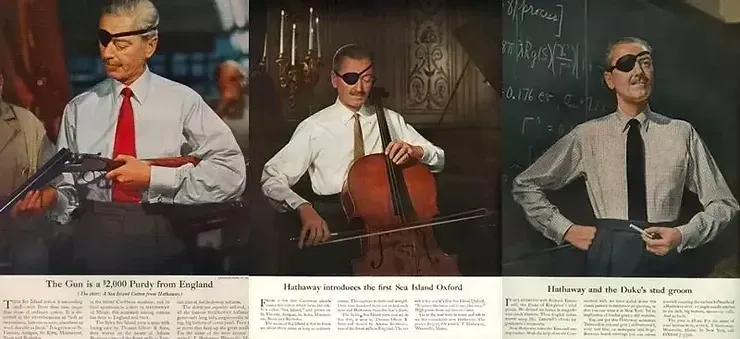
Over the course of his career, Ogilvy wrote two books on advertising: Confessions of an Advertising Man (1963) and Ogilvy on Advertising (1983). He also wrote widely circulated articles on marketing strategies, corporate identity, and public relations. In 1965 he received a knighthood for services to British industry, becoming Sir David Ogilvy -- although he declined further honors due to his American citizenship.
"Ogilvy on Advertising" is one of our favorite books on marketing!
After retiring in 1973, Ogilvy continued to consult for O&M and other agencies worldwide while also contributing to many charitable causes, including the establishment of schools in India and supporting medical research at Johns Hopkins University, where he endowed a chair in memory of his late wife Anne Ogilvy.
David Ogilvy passed away peacefully at the age of 88 in July 1999, after suffering from Alzheimer's disease in his final years; however, before that he had lived an incredibly influential life, in which many consider him one of the greatest minds ever to grace the advertising world, thanks to his innovative ideas on brand building, creative campaigns, and market research techniques.
On this note, a fundamental lesson Ogilvy repeatedly emphasized is the importance of understanding what drives customers. Their deepest desires -- what we at Deep Marketing call "deep needs" (not coincidentally, our agency is inspired by Ogilvy & Mather). Ogilvy believed that by learning about consumer motivations, advertisers could create targeted messages that would be effective in reaching them. To this end, he encouraged marketers to conduct thorough research into consumer psychology and behavior. Before Ogilvy, there was insufficient emphasis on the subconscious aspects of customers.
Thank you, great Master.
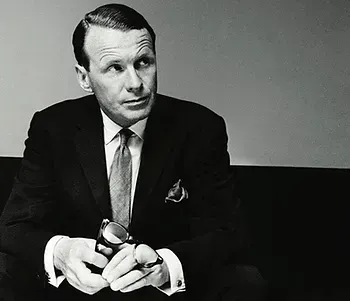
The Irreverent American, Jay Chiat
Another towering figure in advertising is Jay Chiat. He founded one of the first major American advertising agencies, Chiat/Day. He is credited with revolutionizing the American advertising industry through his focus on creative innovation and bold ideas. His philosophy was that successful campaigns, to be effective, had to break free from the usual conventions and capture people's attention. To make this happen, he advocated combining fresh imagery, clever wordplay, humor, and compelling narratives that could resonate with consumers. These techniques have now become commonplace in successful marketing efforts. His vision and leadership changed the advertising world forever.
Jay Chiat was born in Brooklyn, New York, in 1931. He attended Stuyvesant High School before enrolling at the University of North Carolina at Chapel Hill, where he studied economics. After college, he served in the military as a navigator on a B-29 bomber during World War II.
After leaving the military, Jay Chiat "paid his dues" at a fairly well-known advertising agency of the time called Grey Advertising. In 1962, he left Grey and founded his own advertising agency, which became known as Chiat/Day. Under Jay's leadership, Chiat/Day grew rapidly to become one of America's most successful advertising agencies, helping pioneer many new marketing strategies, such as event or "guerrilla" marketing and creating iconic television commercials, like Apple's 1984 ad, strongly championed by Steve Jobs to position the company as disruptive and creative compared to IBM and its clones.
Beyond his advertising achievements, Chiat served on the boards of several major corporations, including (of course) Apple Computer Inc., Columbia Pictures Industries Inc., MTV Networks Inc., National Broadcasting Company Inc., Sony Pictures Entertainment Inc., and Warner Music Group Corp. In 1990, he was inducted into the One Club Hall of Fame for creative excellence alongside other industry legends such as the aforementioned David Ogilvy, George Lois, Martin Puris, and Jerry Della Femina.
Jay Chiat died of cancer at the age of 70 in 2002, but his legacy will live on forever through his contributions to both advertising and philanthropy. He is widely recognized for having revolutionized modern advertising, combining creative flair with innovative business practices to produce lasting results for both clients and consumers -- an achievement that continues to be celebrated today in the marketing world.
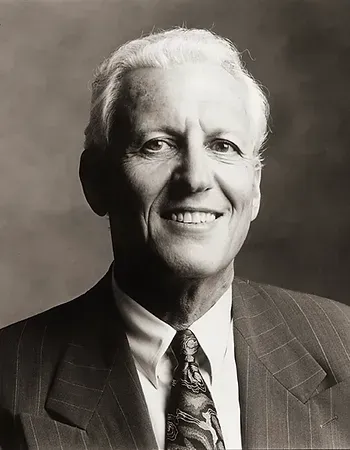
The Ethical Copywriter, Bill Bernbach
William "Bill" Bernbach was a pioneering figure in the advertising industry. His creative strategies, persuasive abilities, and keen eye for detail left an indelible mark on modern advertising. Born in 1911 in New York to Austrian immigrant parents, he developed an early interest in marketing and writing while attending the City College of New York. After graduating in 1931, he found a job at an advertising agency as a copywriter.
Notice the common thread connecting all our heroes: a long apprenticeship. No improvisation.
He quickly earned a reputation as a talented writer and climbed the ranks of the agency, eventually becoming its creative director. In 1949, Bill Bernbach founded the agency Doyle Dane Bernbach (DDB) with Ned Doyle and Maxwell Dane. The agency soon became one of the most successful communication firms in history thanks to its innovative approach to advertising, built on an extended blend of Ogilvy's and Chiat's ideas: crafting creative ads grounded in understanding people's behavior and motivations, combined with freshness and honesty, rather than simple sales pitches.
And for Bernbach, values were everything in communication.
This approach revolutionized the industry, earning DDB acclaim from clients and competitors alike. With Bill Bernbach at the helm of the creative department, DDB created some of the most iconic campaigns in history, such as the Volkswagen "Think Small" campaign, which highlighted the practicality of small cars over larger ones; the Avis Rent-a-Car "We Try Harder" campaign, which demonstrated a commitment to customer service; and the Clairol Hair Color "Does She...or Doesn't She?" campaign, which introduced a new wave of female confidence through the choice of hair color.
Every former communications student knows these masterpieces by heart!
The principles embodied by Bill Bernbach have become standard practice among marketers today: thinking beyond selling products or services to instead build relationships; using emotions to engage the audience rather than relying solely on facts; favoring brevity over verbosity; emphasizing visuals over text; designing ads that are honest, transparent, and reflect human values; writing simple but powerful copy; using humor when appropriate; building brands through storytelling rather than slogans alone.
These principles were not only new when Bill Bernbach first introduced them, they remain relevant today among leading communication experts, despite dramatic changes in consumer habits and expectations regarding advertising messaging, and despite the mountain of self-proclaimed gurus who claim otherwise (debunked by research -- you can learn more here). Bill Bernbach understood that great ads were entertaining and persuasive because they spoke directly to people's values, and he reinforced this in every single spot he created for DDB until his retirement in 1967.
His legacy lives on through awards like the annual "Bill Bernbach Award" from the American Advertising Federation Hall of Fame, which honors individuals who exemplify creativity, originality, insight, leadership in their profession, and significant contributions to society. By all accounts, both then and now, Bill Bernbach was one of the greatest minds in advertising history, whose genius will continue to be remembered long after his passing in 1982 at the age of 71.
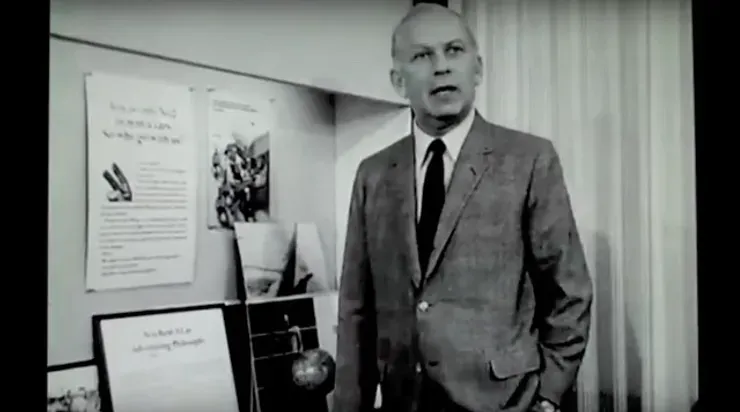
The Honest Salesman, Claude Hopkins
Hopkins' early successes:
The author is best known for his book Scientific Advertising (1923), in which he laid out a system for successful advertising that included careful measurement of results. He advocated for creating advertisements focused on the practical benefits of the product rather than its intangible features. His work also emphasized the importance of using data both to craft effective messages and to measure their success or failure.
He was firmly opposed to exaggeration and false claims, believing instead that only honest messages should be used to attract customers.
If you are wondering how it is possible that ALL the founding fathers of advertising emphasized the importance of understatement and honesty while today the opposite is almost always taught by the great experts -- who call themselves such without proof -- know that we fight alongside you every day to bring marketing back to its origins and its nobility. This is our mission.
Claude Hopkins' legacy is still evident today: many modern marketing techniques are based on what he wrote so long ago. His emphasis on the power of data-driven decision-making has been adopted across various industries, including retail, healthcare, banking, and beyond -- something he would no doubt be proud of! The impact of Hopkins' work can also be seen in many aspects of top-quality modern advertising, such as the use of stories as part of branding campaigns or the avoidance of "hard sell" tactics -- high-pressure, aggressive selling.
Overall, Claude Hopkins left an impressive legacy in the world of marketing and advertising, one that continues to inspire generations of professionals around the globe through his clear focus on information, product benefits, storytelling, and ethical selling.
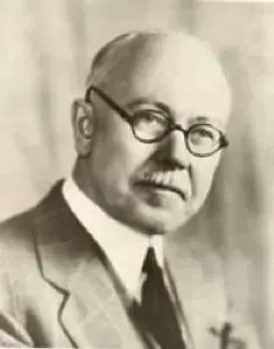
We have told the extraordinary stories of four exceptional men. Four human beings united by the pursuit of excellence, value, transparency, imagination, creativity, and success for their clients. Four people who loved the clean side of our profession.
Four beacons that light the way for us at Deep Marketing every single day.
Want to work with a serious agency that truly loves marketing? Contact us now.