
In short: The best AI tools of 2026 for business fall into seven categories (content, SEO and GEO, advertising, video and images, coding, operations, research). The winner is whoever integrates the stack, not whoever buys the "all-in-one" suite: a bundle of 6-8 well-orchestrated tools remains within reach of an SMB budget, but only if preceded by clear baselines and use cases.
- $4.4 trillion in potential annual economic value from GenAI (McKinsey, State of AI 2025).
- 78% of companies use AI in at least one business function in 2025 (Stanford AI Index 2025).
- 95% of enterprise GenAI projects fail to produce measurable ROI in the first year (MIT Project NANDA 2025).
In 2026, choosing the best AI tools no longer means "which chatbot to use". The market has fragmented into seven distinct families and each one addresses a different marketing, productivity or creativity problem. Buying licenses without strategy remains the costliest mistake: Gartner (Hype Cycle for AI 2025) estimates that 40% of enterprise GenAI projects will be abandoned by 2027 for lack of demonstrable value.
This guide maps over 40 tools relevant to marketing teams in 2026, with prices updated to March 2026, operational best use cases and explicit caveats. The goal is not a ranking, but a composable stack: a marketer today needs to know which 5-7 tools to combine to generate real operational savings, not collect 30 subscriptions.
Why do 60% of AI tools disappoint? The 3-criteria framework
According to the McKinsey — The State of AI 2025 report, only a minority of companies adopting GenAI manage to translate it into measurable profit at the EBIT level. The difference is not made by the underlying model, but by how the tool fits into the workflow. Before recommending any subscription it's worth applying a three-question filter.
- Native integration: does the tool connect to existing CRM, CMS or data layers? An isolated tool forces manual copy-paste and kills ROI.
- Measurable baseline: do we know how much time or budget the task takes without AI? Without a baseline, every "improvement" is opinion, not data.
- Exit strategy: what happens if the vendor raises prices by 300% or gets acquired? Prefer open standards and exportable data.
Proof that integration matters more than the model comes from public data: the Microsoft — Work Trend Index 2024 shows that 75% of knowledge workers already use generative AI at work, but concrete impact only emerges where AI is stitched into existing processes. Similarly, GitHub research on Copilot productivity measured that developers using the assistant complete a reference task 55% faster than the control group — evidence of how value arrives when the tool lives inside the editor, not when it stays a parallel chatbot.
What are the best AI tools for content and copywriting in 2026?
The frontier language models are three and cover over 90% of B2B editorial use cases. ChatGPT (GPT-5) from OpenAI remains the most versatile, Claude 4 from Anthropic excels at long-form argumentative writing, Gemini 2.5 Pro from Google wins when you need to integrate live data from the web. Below these three giants there are vertical tools designed for marketing teams: Jasper and Copy.ai for editorial pipelines, Writer.com for enterprise compliance, Notion AI for integrated knowledge bases.
The choice doesn't depend on the raw quality of the model (by now a commodity), but on brand voice, integration and governance. A senior copywriter working on regulated brands (finance, pharma) prefers Writer.com because it offers red-teaming and an audit trail; a B2B growth team chooses Jasper for its ready-made campaign templates.
The operating rule: a small team (1-3 people) is best served by ChatGPT Team + Claude Pro, spending under 100 euros per month. An enterprise team with compliance needs must add Writer.com. Jasper makes sense only if there's already a structured multichannel editorial process in place, otherwise it's overpriced.
What are the best AI tools for SEO and GEO in 2026?
SEO in 2026 is dual: on one side classic Google optimization, on the other GEO (Generative Engine Optimization) to get cited by ChatGPT, Perplexity and Gemini. Semrush and Ahrefs have integrated AI modules for topic clustering and content gap analysis; Surfer SEO remains the standard for NLP-driven on-page optimization; Clearscope holds the edge on semantic suggestion quality.
The real novelty is GEO-first tools: Profound and Otterly.AI track when and how a brand is cited in generative engine answers, with AI share-of-voice dashboards. According to the Semrush AI Search Report (January 2026), Google's AI Overviews now appear in over 70% of informational queries, making GEO monitoring no longer optional.
For a structured audit of positioning in AI engines, it makes sense to pair specific monitoring tools with SEO and GEO link building consulting calibrated on share-of-voice and quotability metrics. The underlying logic is that citations in generative answers replicate the logic of earned links: it requires continuous oversight, not a one-off.
What are the best AI tools for advertising and performance in 2026?
In paid media the frontier is creative automation: Meta Advantage+ and Google Performance Max use proprietary AI to optimize audience, bidding and creative in combination. Pencil and AdCreative.ai generate creative variants on a continuous cycle, reducing production time from days to hours. According to the HubSpot — State of AI Marketing Report 2025, the majority of marketers who have integrated generative AI into their workflow report significant efficiency gains in creative production, with content generation among the top three adopted use cases.
The real risk isn't the quality of generated creative, but algorithmic dependency. An advertiser who delegates 100% of the decision to Advantage+ loses the ability to understand why a segment performs, and when the algorithm misfires they pay dearly in learning costs. The 2026 best practice is dedicating 20% of budget to controlled manual tests even when the algorithm is working.
What are the best AI tools for video and images in 2026?
Video generation is the area with the biggest quality leaps of the past year. Sora 2 from OpenAI, Runway Gen-3 Alpha and Kling allow cinematic clips up to 60 seconds with narrative consistency. For avatar-based content, HeyGen and Synthesia dominate multilingual corporate video production. On the image front, Midjourney v7 remains the aesthetic benchmark, Flux (Black Forest Labs) offers superior control via API, DALL-E integrated in ChatGPT wins on moodboard prototyping speed.
The cost per second of generated AI video is still prohibitive for mass production: Sora generates 10 seconds in 1080p for about $2 of credit, Runway Gen-3 between $1 and $3. For SMBs the healthiest compromise remains AI-assisted editing with Descript or Captions on real footage, reserving full-AI generation for brand spots or idents. For native AI social distribution of this content, it can make sense to pair it with a social and content strategy built on measurable feedback loops.
What are the best AI tools for coding and development in 2026?
Coding is the area where AI has had the fastest penetration. According to the Stanford AI Index 2025, over 82% of professional developers use at least one AI assistant daily. GitHub Copilot remains the most widespread but not the best: Cursor and Windsurf, with multi-file agents and executable tasks, offer a measurable quality leap. Claude Code from Anthropic, CLI-based, has become the standard for complex refactoring and autonomous development tasks.
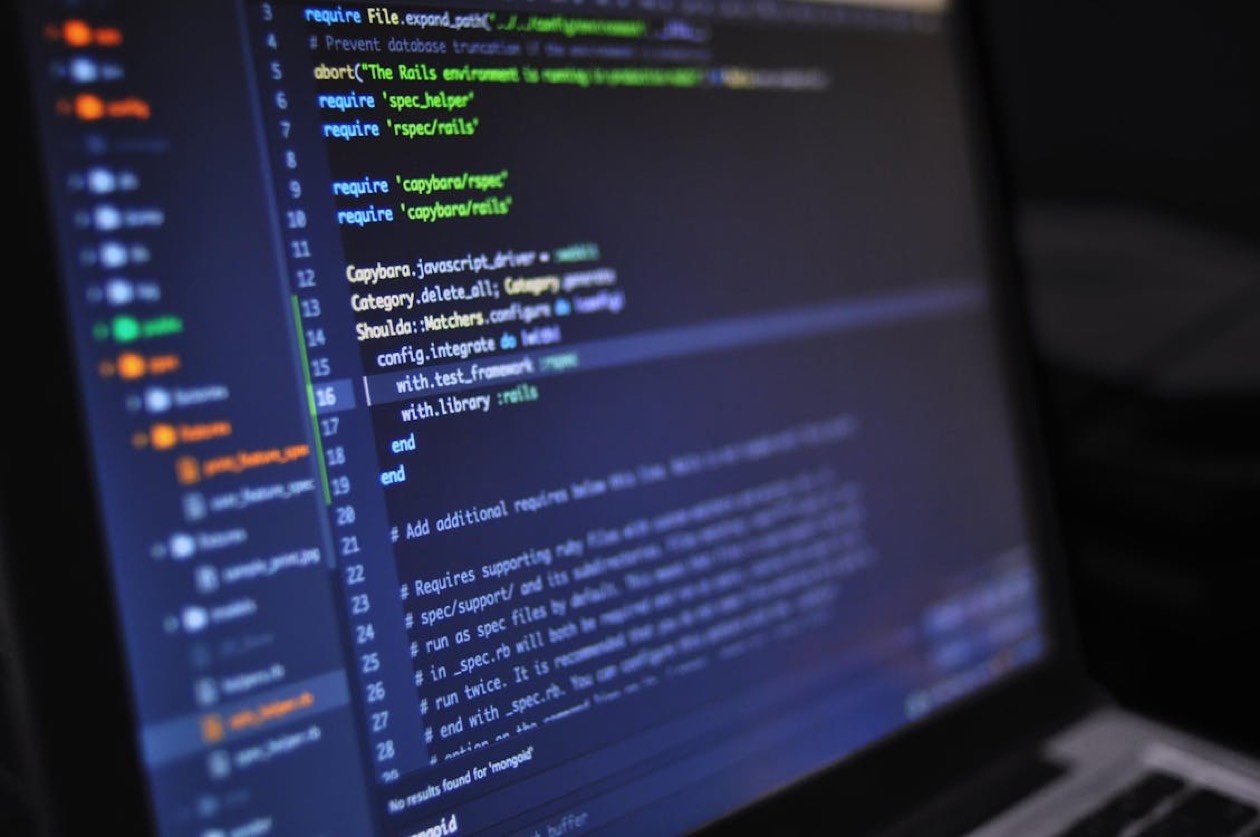
The real benefit of AI coding isn't writing code faster (a junior using Copilot poorly produces bugs). It is shortening the learning curve on unfamiliar stacks and reducing the cost of switching between languages. A marketer with Python basics can today build a custom dashboard in 2 hours with Cursor: this was a technical agency project back in 2023.
What are the best AI tools for operations and automation in 2026?
AI-first automation has three clear leaders: Make.com for no-code visual workflows, n8n for technical teams that want self-hosting and full control, Zapier with the new AI Actions for those already in the Zapier ecosystem. Above these is Relevance AI, which lets you orchestrate autonomous agents with persistent memory for business tasks (lead qualification, tier 1 customer support, content curation).
The operating rule consolidated in the literature: the first corporate AI workflow must solve a repetitive, high-volume task, not a complex strategic one. Example: daily summary of SERP positions with Linear ticket generation if a transactional page drops by more than 20%. Value is not in generative magic but in eliminating manual polling and context switching; it's the same adoption pattern described by the Stanford HAI — AI Index Report 2025, which identifies automation of repetitive tasks as the first ROI driver in enterprise adoption.
What are the best AI tools for research and analysis in 2026?
Perplexity Pro is one of the AI search engines most used by professionals in 2026, backed by steady active-user growth documented in coverage from MIT Technology Review. Elicit dominates in academic research (scientific papers with assisted summarization), Consensus offers a vertical dashboard on scientific evidence for marketing claims. For internal knowledge management, Google's NotebookLM has become the free standard to turn company documents into queryable chatbots.

For a healthy marketing team, the 2026 research stack costs less than 50 euros per month: Perplexity Pro ($20) + NotebookLM (free) + 1 Elicit or Consensus subscription depending on the sector. Most of the value comes from the habit of using them daily, not from a premium plan.
What mistakes should you avoid when choosing AI tools?
Recurring mistakes in enterprise AI projects follow recognizable patterns. The first is tool shopping without a use case: buying 5 subscriptions "to try them" instead of defining a problem and testing one tool for 30 days. The second is skipping the baseline: without measuring pre-AI time, every "improvement" is perceived, never demonstrated. The third is confusing output with outcome: producing 50 AI articles per week isn't a result; the result is leads or revenue.
The fourth mistake, the most subtle, is single-vendor dependency. The AI market has already seen significant price hikes from major providers and cases of deprecation or consolidation (acquisitions, product shutdowns); MIT Technology Review covers this recurringly in its industry reporting. The defense is architectural: choose tools with standardized export, open APIs and at least one plausible market alternative.
Frequently Asked Questions
How much does a complete corporate AI stack cost in 2026?
A well-designed corporate AI stack for a team of 4-5 people costs between 300 and 600 euros per month. The minimum configuration includes ChatGPT Team or Claude Pro ($25/user), an SEO/GEO tool like Otterly or Semrush, an automation engine like Make.com, an image generation tool like Midjourney. Enterprise stacks with governance, compliance and custom agents range between 3,000 and 10,000 euros per month.
What is the best free AI tool in 2026?
The best free AI tools in 2026 are Gemini (Google free tier), Claude Free, Perplexity Standard and NotebookLM for personal knowledge bases. For image generation, Leonardo AI offers daily credits at no cost. Caution: nearly all free tools have significant rate limits and often use your data for training. For continuous professional use, it's worth upgrading to a paid plan, at least for the main language model.
ChatGPT or Claude for B2B copywriting?
For argumentative, long-form B2B copywriting, Claude 4 Sonnet produces stylistically more natural and less formulaic output than ChatGPT. ChatGPT excels instead at creative brainstorming, short multichannel texts and multimodality. Best practice is to keep both active and orchestrate: initial brief on ChatGPT, drafting on Claude, final SEO optimization on Surfer or Clearscope. Total cost: about 45 euros per month per user.
Will AI tools replace marketing agencies?
AI tools are replacing commodity execution (first drafts, mechanical translations, repetitive reporting), not strategy or critical thinking. The HubSpot State of AI in Marketing describes a picture in which AI adoption goes hand in hand with an increase in strategic complexity (tool selection, governance, measurement), not a reduction in the role of experts: more skills are needed to orchestrate the stack, not fewer. The agencies that lose are those that only sold low-value execution.
How do you measure the ROI of an AI tool?
The ROI of an AI tool is measured by comparing three metrics pre and post adoption: time per task (hours or minutes), output quality (from blind-test rubric) and downstream business outcome (conversions, leads, revenue). The minimum observation window is 30 days, ideally 90. Consistent with what McKinsey — The State of AI 2025 highlights, measurable impacts emerge in organizations that define downstream business KPIs before launch, not after: without ex-ante metrics, adoption remains spending without financial anchoring.
Does the European AI Act impact corporate use of AI tools?
The European AI Act, applicable from 2026, classifies AI tools by risk level. Productivity tools (ChatGPT, Claude, Midjourney) are generally at minimal or limited risk, with transparency obligations on generated content. Tools that make automated decisions about people (HR, credit, scoring) have heavy obligations. For marketing, the concrete impact is the disclosure obligation on AI-generated published content, already adopted by major brands.
Need help with your company's AI stack?
Deep Marketing supports brands in selecting, integrating and measuring AI marketing stacks calibrated on the real business problem. Request a free audit of your current stack or discover our AI-first SEO and GEO consulting designed to get you cited by generative engines with clear share-of-voice and quotability metrics from day one.
Sources and References
- Gartner — Hype Cycle for Artificial Intelligence 2025
- McKinsey — The State of AI 2025
- Stanford HAI — AI Index Report 2025
- Statista — Artificial Intelligence Market Outlook 2026
- HubSpot — State of AI Marketing Report 2025
- Forrester — The State of Enterprise AI 2026
- MIT Technology Review — AI Coverage 2025-2026
- a16z — Enterprise Generative AI Survey 2025
- Semrush — AI Overview & AI Search Report (January 2026)
- Stanford HAI — AI Adoption in Business 2025