
In short: On February 9, 2026 OpenAI launched advertising on ChatGPT for Free and Go users in the USA. It is the end of the era of the AI advisor perceived as impartial: from today conversational answers coexist with sponsored ads, with concrete impacts on trust, purchase journeys and SEO/GEO strategies.
- OpenAI 2025 revenue: 13.1 billion dollars, targeting 29.4 billion in 2026, with 1 billion projected from free-user monetization alone (Reuters, 2025)
- ChatGPT traffic: 5.6 billion monthly visits in February 2026, second most visited AI site in the world (SimilarWeb, 2026)
- Ad model: 60$ CPM, 200,000$ minimum commitment per advertiser, with WPP estimating 500-800 million dollars in advertising revenue in the first year (Adweek, 2026)
What changed in ChatGPT in 2026
There was a moment, brief but real, when millions of people believed they had access to a neutral advisor. A digital oracle with no hidden agenda. ChatGPT became within a few months the place to ask "which laptop to buy", "which restaurant to choose in Milan", "which CRM software is best for an SME". And answers arrived without asterisks, without banners, without the suspicion that someone had paid to appear at the top of the list.
That moment ended on February 9, 2026. OpenAI officially activated advertising on ChatGPT, starting with Free and Go users in the United States. At Deep Marketing we have been following this evolution since the first rumors emerged in 2025, and what we see today confirms a dynamic we know well: every platform that reaches critical mass ends up monetizing its users' attention. It happened with Google, with Facebook, with Instagram. Now it is happening with AI.
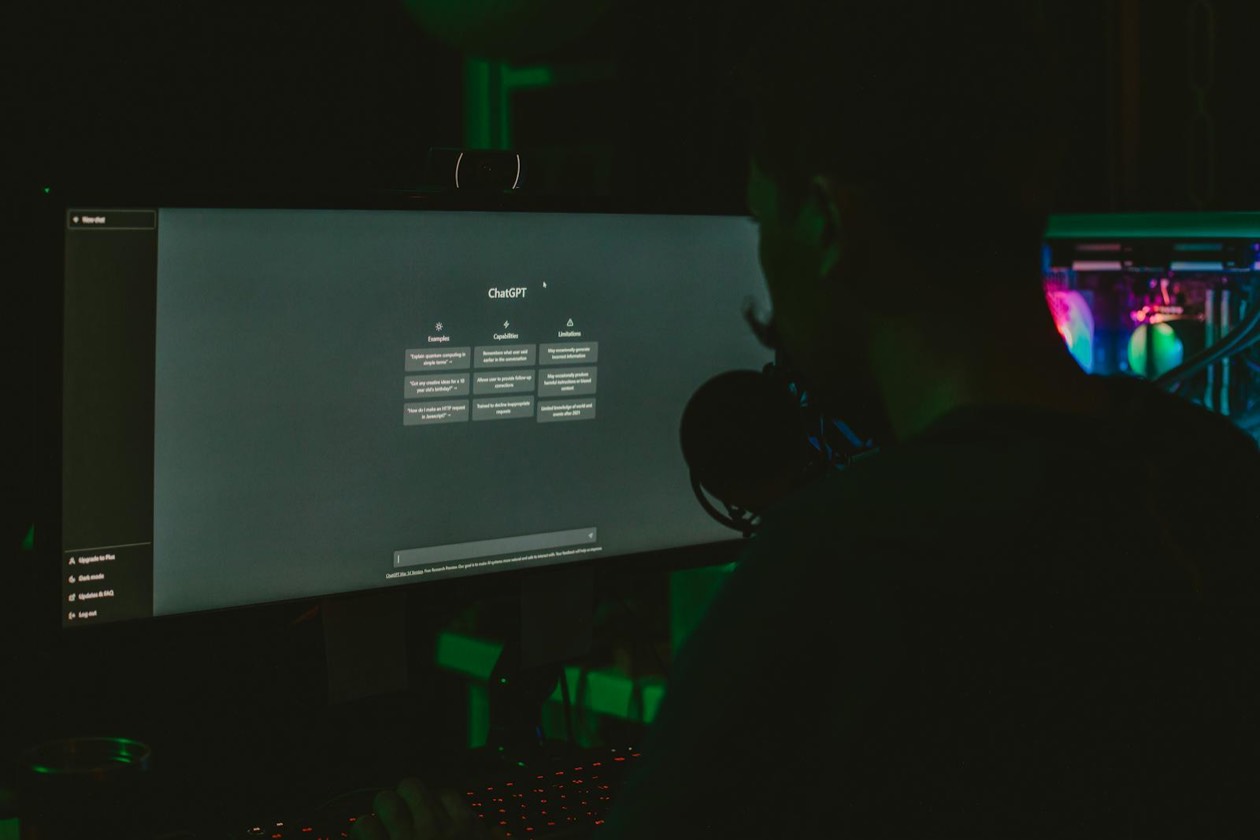
But this time there is a substantial difference from the past. Google showed a list of results and then added ads alongside. ChatGPT talks with you. And when someone who talks with you starts recommending sponsored products, the relational dynamic changes radically: you are not contaminating a list, you are contaminating a dialogue perceived as personal advice.
Anatomy of the new advertising channel
According to OpenAI's official announcement (January 2026) and data confirmed by Adweek and TechCrunch, ChatGPT's advertising system works as follows:
Why impartiality is over (and why it is worse than with Google)
Unlike Google (keyword-based) and Meta (interest/behavior-based), ChatGPT combines the intent signal of the current question with the behavioral context of the entire conversation history and saved memories. In practice, if you asked ChatGPT for wedding advice three weeks ago and today ask about a trip, the system knows who you are, what you are planning and how to interconnect your needs. This is not a banner on a website: it is an unprecedented level of conversational targeting.
The Google precedent is instructive. In 2013 the US Federal Trade Commission (FTC) flagged a "decline in compliance" by search engines in clearly differentiating ads from organic results. In 2004 ads had a clearly colored background; today the visual difference between an ad and an organic result is minimal. The trajectory is known and replicable: ad labels tend to become less and less distinguishable over time.
Early ChatGPT vs commercial ChatGPT: what really changes
How to recognize sponsored AI recommendations
ChatGPT's "conversational banner" format introduces something new: the user can ask the chatbot questions about the sponsored product. This creates a hybrid between advertising and content that is much harder to distinguish than a traditional banner. Some practical signals:
- "Sponsored" or "Promoted" label next to the brand name: today clearly visible, tomorrow probably less so.
- Sudden product carousels when the question was not transactional: a signal that the topic activated an advertising pattern.
- Large brands repeated in contexts where they were absent in previous versions: a signal of a distribution deal.
- Very "pro" answers on a single vendor without comparison: cross-check with external sources before deciding.
KPMG research (2025) reveals that 66% of people use AI outputs without assessing their accuracy. If most users do not even verify whether an answer is correct, how many will really notice the difference between an organic suggestion and a sponsored one? The guiding principle is simple: treat every purchase recommendation as an opinion to verify, not as a verdict.
What it means for brands (and what Italian SMEs must do)
According to BCG (2026), GenAI assistants are the second most influential touchpoint in the purchase journey among users and the first touchpoint among daily users. 41% of consumers bought a product recommended by AI in the last six months (CX Dive, 2025). Advertising on ChatGPT is not a marginal channel: it is direct interference in the most powerful decision touchpoint for a growing share of consumers.
But only 14% of consumers trust AI recommendations on their own to make a purchase (Salsify, 2026) and only 46% globally are willing to trust AI systems in general (KPMG, 2025). It is a narrow window: AI drives decisions but trust is fragile.
For Italian SMEs, four practical points:
- Today ads are USA-only, but European expansion is expected by end of 2026 / early 2027. You have a preparation window, not immunity.
- The real game is presence in organic AI results, not sponsored space. Being citable by generative models is the new SEO — we covered this in our guide on how to appear on ChatGPT, Perplexity and Gemini (GEO 2026).
- Trust becomes a competitive asset. The strategy is not to buy space on ChatGPT: it is to build a brand that ChatGPT recommends spontaneously, with authoritative and citable content.
- Diversify touchpoints. Companies that depend on a single channel (Google, Meta or tomorrow ChatGPT) are structurally vulnerable.
The Perplexity case is instructive. After launching ads in November 2024, Perplexity AI completely abandoned the advertising model in February 2026 to protect the integrity of answers. An executive told the Financial Times: "Once ads appear in the results, users start wondering if answers maintain their integrity or contain subtle commercial influence". It is the opposite of the path chosen by OpenAI — and a signal of how epistemic trust has become a competitive battleground.
Do you need GEO to be cited by ChatGPT?
Deep Marketing helps Italian brands and SMEs build semantic authority and visibility in generative AI models, so they get cited in conversational answers without buying ad space. Request a free GEO audit or explore our SEO, GEO and AI-first link building consulting.
Frequently Asked Questions
Is ChatGPT impartial in its recommendations?
No, not fully anymore. Since February 9, 2026 OpenAI has introduced sponsored ads for Free and Go users in the USA, with partners such as WPP, Omnicom and brands like Adobe, Ford and Target. Organic answers still exist and are separated by a "Sponsored" label, but the conversational context makes the boundaries between advice and advertising less clear than in a classic SERP.
Does ChatGPT show ads in Italy?
Currently (April 2026) ChatGPT ads are active only for users in the United States on the Free and Go tiers. European expansion is expected by the end of 2026 or early 2027, likely starting from UK, Germany and France. There are no official dates yet for the Italian market, but the AI Act and DSA will probably require stricter disclosure than the American model.
How do you optimize for GEO if ChatGPT is biased?
The key is to build authority in the sources that generative models use to answer: in-depth content with verifiable data, citations from authoritative sources in your sector, structured data (Schema.org), mentions from recognized media and presence on Wikipedia and vertical directories. GEO (Generative Engine Optimization) works on the training corpus and real-time RAG sources, not on ad space.
Can I trust ChatGPT answers for purchases?
With caution. 14% of consumers trust AI recommendations alone to buy (Salsify, 2026), 27% use them but verify with other sources. Practical advice: use ChatGPT to map alternatives and decision criteria, then validate shortlisted options with independent reviews, specialized comparisons and the brand's official website. Treat answers as a first screening, not a final verdict.
Has OpenAI announced official ads?
Yes. OpenAI published the "Testing ads in ChatGPT" announcement in January 2026 and activated the pilot program on February 9, 2026. The model provides for a 60-dollar CPM and a 200,000-dollar minimum commitment per advertiser, with launch partners from WPP, Omnicom and Dentsu. Primary sources are the official OpenAI blog and confirmations from Adweek, TechCrunch and Euronews.
Sources and References
- OpenAI — Our approach to advertising and expanding access to ChatGPT (2026)
- OpenAI — Testing ads in ChatGPT (2026)
- Reuters — OpenAI expects revenues to more than triple (2025)
- SimilarWeb — ChatGPT.com traffic and engagement (2026)
- TechCrunch — ChatGPT rolls out ads (February 2026)
- Adweek — OpenAI Confirms $200,000 Minimum Commitment for ChatGPT Ads (2026)
- The Verge — OpenAI launches ads in ChatGPT (2026)
- KPMG — Trust, attitudes and use of AI: A global study (2025)
- Salsify — 2026 Consumer Research Report: AI Trust Gap (2026)
- BCG — Consumers Trust AI to Buy Better. Brands Need to Move Quickly (2026)
- Stanford HAI — AI Index Report (peer-reviewed on LLM bias and trust)
- Search Engine Land — A visual history of Google ad labeling