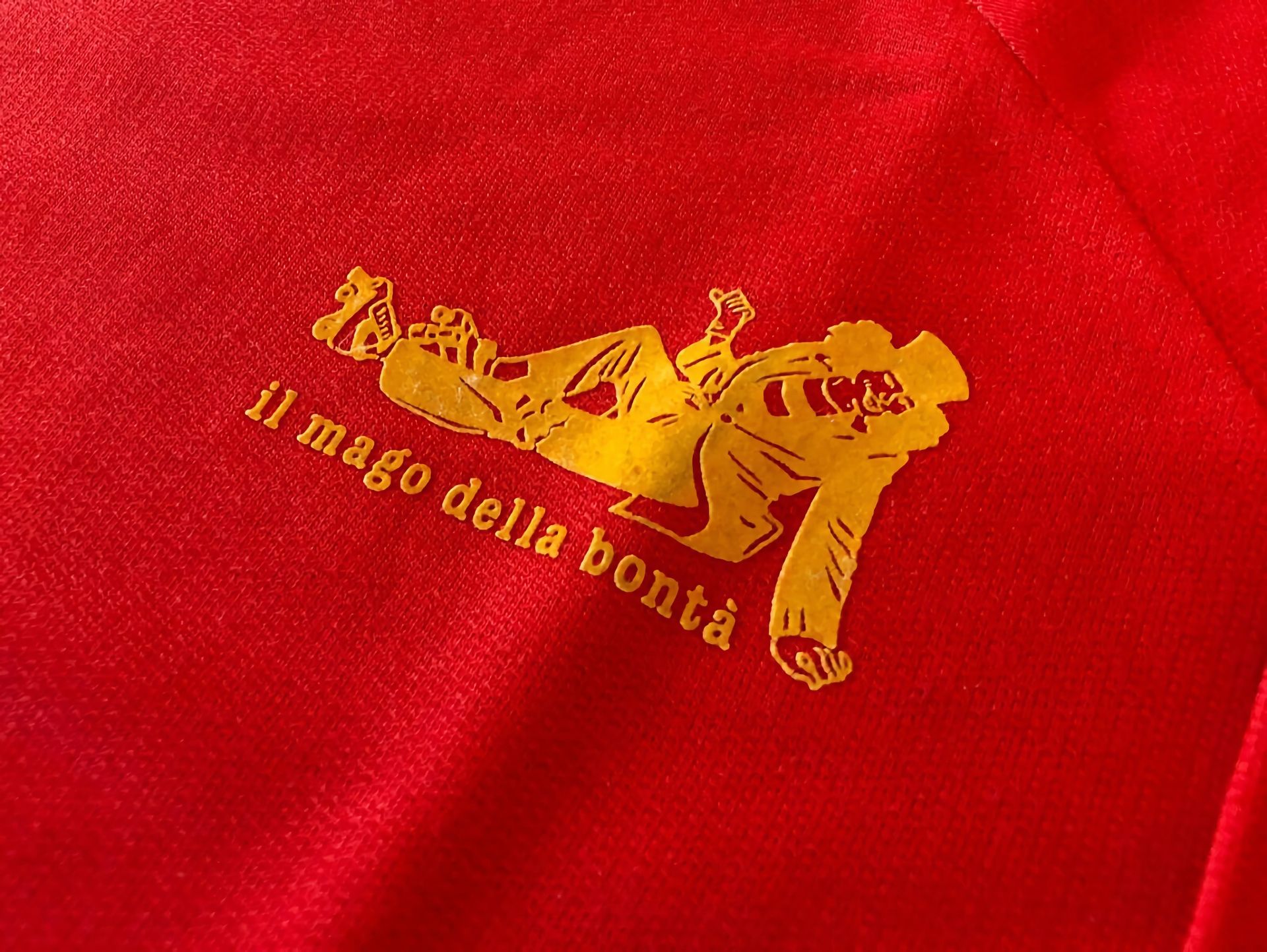
Galbusera and Mago G! Names that immediately evoke the aroma of freshly baked cookies, the (sometimes over-the-top and almost cringe-worthy) '80s aesthetic, and that represent an authentic piece of Italy's culinary heritage.
Allow me to share with you the fascinating story of this brand which, while not among Deep Marketing's clients (yet?), deserves an in-depth analysis to understand how it has managed to remain relevant in an increasingly competitive market.
From Valtellina to Industry
Galbusera's story begins in 1938 in a small workshop inside a cafe-pastry shop in Morbegno, in the Valtellina valley, when brothers Mario and Enea Galbusera, sons of founder Ermete, decided to expand their father's workshop. What started as a craft operation, prized for its pastries and confections, gradually evolved to include the production of artisanal cookies.
It was only in 1950 that the first industrial plant was launched, marking the beginning of the transformation from a small pastry shop into a true business enterprise. The distribution of Galbusera products, initially limited to the Valtellina valley, progressively expanded to Lombardy and then across all of Northern Italy. The 1960s marked a turning point with the opening of the Cosio Valtellino factory in 1966, which enabled distribution now extended throughout Northern Italy. In the 1970s, the establishment of commercial and marketing offices in Agrate Brianza and the development of an efficient distribution network — thanks to the contribution of Franco Giandonati (a historic Milanese manager and collaborator of Mario Galbusera) — definitively brought Galbusera cookies beyond the Valtellina valley.
The quintessential "Italian miracle" that would simply not be possible today. Some entrepreneurs seized this perfect moment in history — largely thanks to the Americans and the Marshall Plan — to "make" History.
The Evolution of Visual Identity
Galbusera's visual identity has undergone numerous transformations over the years, reflecting the company's evolution and adapting to market changes, while maintaining a consistency that is remarkably rare. The first logo, created in 1959, was a simple calligraphic inscription, typical of the era. In 1981, the brand evolved: the logotype became brown, composed of lowercase letters, with the single letter "g" featuring a circular cookie shape in its upper counter. Probably the least successful version, because it lacked both the thoughtful script style of the first logo and the pictogram of subsequent logos.
The 1990s brought yet another change: the new logo no longer showed (thankfully!) the cookie but instead featured the black wordmark with 6 oblique red elements. In 2008, the Milanese agency Robilant was tasked with redesigning the logo, which was redrawn with a new typeface and softened stripes that almost simulate an embrace, along with blue and orange gradients that convey greater naturalness and warmth.
In my view, the true "leap" happened in 1990. We can see a completely different and bolder font compared to the past, well-balanced, with correct kerning. It tries to recall the initial calligraphic element while thankfully ignoring the 1981 logo. I can't fully explain the choice of the excessively horizontal and rigid pictogram on top, but the truth is that the '90s were full of such rigid, sharply defined symbols.
The most recent restyling dates to 2019, when Galbusera introduced a new logo with the graphic mark positioned above the logotype which, through appropriate cuts, evokes the mountains of Valtellina, recalling the company's origins. It retains the 2008 font but follows a contemporary aesthetic of flat, more minimal, and delicate elements. In my opinion, it succeeds, without sacrificing too much personality.
Below is the logo evolution, credits https://www.museodelmarchioitaliano.it/galbusera/
From "Mago G" to Galb&b
Galbusera's communication has always managed to stand out and emotionally connect with consumers. In the 1980s, the company won over audiences with memorable commercials, the most famous of which featured the unforgettable "Mago G" or "the wizard of goodness" who, wearing a wig and yellow-and-red clothing, would roller-skate through the streets of Milan with a wheelbarrow to hand out packages of Valtellina cookies.
In hindsight, this wizard was rather scary and grotesque. But hey, it was the '80s! All of this was perfectly normal!
Over the years, Galbusera's communication has evolved while always keeping authenticity, genuineness, and wellness at its core. In 2024, the company launched a new communication format in collaboration with VML Italy, which symbolically opens the doors of the "Galb&b," an aspirational setting that serves as a container for Galbusera's stories and products, highlighting their nutritional promises and unique qualities.
If in the 1980s Mago G WAS Galbusera, today Galbusera is the context of origin. Environmental. More reassuring and warm. A fascinating symbolic shift.
Another interesting evolution in Galbusera's communication is the use of animation. In 2024, the company chose to show for the first time the place where it all began, using the language of animation. Through numerous episodes, viewers enter an extraordinary, magical world made of delicious products, special characters, and mountain air.
When Healthy Eating Wasn't Trendy Yet
Those who lived through the 1980s will remember that talking about "healthy food" was almost considered eccentric. While everyone was gorging on industrial snacks packed with hydrogenated fats and preservatives, Galbusera did something unexpected: cookies with more natural ingredients. An almost subversive act, if you will. It wasn't just marketing — otherwise, it wouldn't have lasted.
The 1990s slogan "Health comes first" might seem cliche today, but back then it represented a quiet revolution. I can still picture the green packaging of the "Speciali Salute" (Health Specials) line. Surprisingly, they didn't taste like cardboard, unlike other "diet" products of the era.
The truth is, I'm also fond of Galbusera because they've managed to do what many brands fail miserably at: making something healthy actually appetizing. Their whole-grain cookies didn't feel like a punishment but a credible alternative. An almost impossible balance to strike in the food industry, where "healthy" is so often synonymous with "bland."
Here's an interesting detail: in 2014, while many food industry competitors were focused on international expansion, Galbusera made a contrarian move by acquiring Tre Marie Ricorrenze. A brilliant strategy: instead of spreading resources thin abroad, they strengthened their presence in a premium segment of the Italian market.
Surviving in a Market of Wolves
Let's be frank: the food industry today is a minefield. Inflation has sent raw material costs skyrocketing to absurd levels, and the average consumer is caught between the desire for quality and an ever-thinner wallet. I've heard Giovanna Solito, Galbusera's marketing director, speak about an "inflationary scenario" — an elegant technical phrase for saying that ingredient prices are through the roof and margins are shrinking like a Crackers Salati left in your mouth too long.
But Galbusera's real challenge isn't just economic. It's staying relevant in a market where every week a new "superfood" appears, a new miracle diet, a new food trend. The average consumer changes their mind about nutrition as often as they switch TV series on Netflix. And here lies the real test: how can a company born in the 1930s speak to the consumers of 2025?
Galbusera's solution is smart but not without risks.
The "Galb&B" format represents an attempt to modernize the image without betraying its roots. It's a nontrivial balancing act: evoking the mountains (a distinctive, authentic element) but placing them in a contemporary context. I find this wordplay amusing — a wink to Airbnb, attempting to blend tradition with modernity.
What intrigues me is whether this approach will truly resonate with Gen Z, who have a completely different relationship with food compared to previous generations. Today's young people aren't just looking for healthy ingredients — they want to know the environmental impact, corporate policies, and supply chain sustainability. On this front, Galbusera will need to accelerate its communication if it truly wants to win over today's twenty-somethings.
Yes, It's an Authentic Brand
Galbusera fascinates me because it represents a paradox in the contemporary marketing landscape. While hundreds of brands born yesterday scramble to construct manufactured stories of "authenticity," here we have a company with a real story, real roots, and a consistent trajectory. They didn't need to invent a grandfather baker or a grandmother with secret recipes — their story is genuinely authentic. How much is that worth in 2025? A great deal, if you know how to tell it the right way.
The ownership structure — with the third generation of the Galbusera family at the helm, maintaining control while entrusting management to outside professionals — is an example of how to balance tradition and professionalism. Frankly, this is rare among many companies.
How many Italian firms have gone extinct because the founder's grandson thought he was a business genius just by birthright? The Galbusera family had the intelligence to know when to step back from operations while maintaining the long-term vision.
I've followed Galbusera's evolution for years, and if I had to bet on an Italian food company capable of weathering the current economic storm, I'd put my money on them.
If I were Galbusera, I'd lean even harder into storytelling about the history and production process, taking consumers behind the scenes. In an era where everything seems fake, showing how your products are truly made is the most disruptive communication you can do.
Galbusera isn't perfect — no brand is.
But in a landscape of soulless multinational giants and food startups that appear and vanish like will-o'-the-wisps, it represents something precious: an Italian company that has managed to reinvent itself while staying true to its identity. And in a world of copies, the original will always hold a special value.
Bravo, Galbusera.