Does the decoy option really work? The Economist case rerun at a picnic
Rerun at a picnic, the Economist price list with the decoy did not shift choices. In 27 studies with products people could try, the decoy never made people choose the offer it was meant to push more often.
The video transcript
The Economist offered the website alone at 59 dollars, the print edition at 125 and print plus website also at 125. Marketing researchers call an offer like print alone a decoy: it sits in the price list to make the full offer look like a bargain.
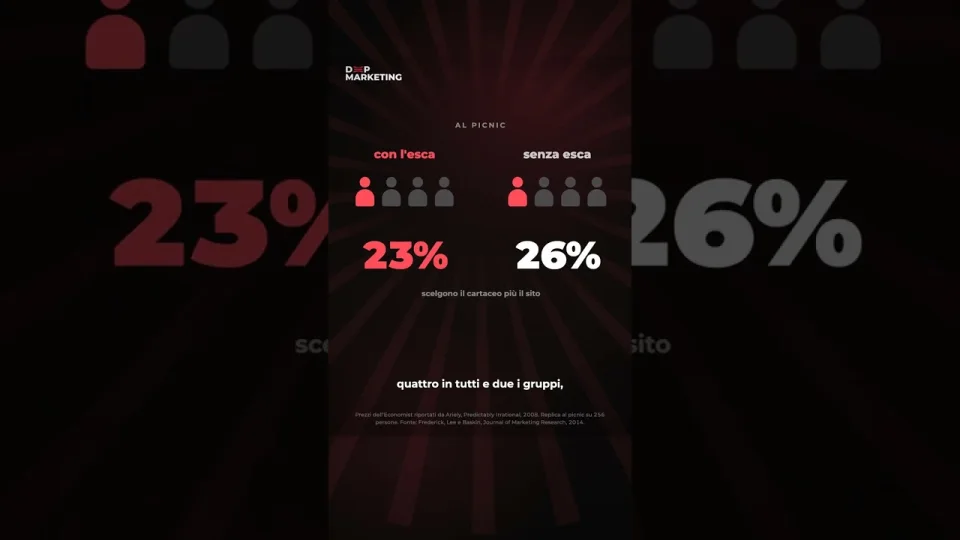
Dan Ariely reports that with his students the decoy took print plus website from 32% to 84% of choices. Frederick, Lee and Baskin reran the test at a picnic, with the same prices. Among the people who saw the price list identical to the original, print plus website took 26% of choices without the decoy and 23% with it.
The researchers then put the decoy into 27 studies with products people could try: drinks and sweets to taste, tissues to touch, flats to look at in photos. In none of them did the decoy make people choose the offer it was meant to push more often. Choices shifted only in the studies where the offers were all compared on numbers.
If you sell things customers taste, try on or look at, such as dishes, clothes or hotel rooms, remove the decoy from the price list. Write clearly what each offer includes and say which one you recommend.