
Press office
for companies.
We find the news inside your company and pitch it to journalists at news agencies, daily papers, trade magazines, TV and radio. When an outlet publishes your story, its readers get to know your company through a newspaper they trust. You pay for the work with a monthly retainer that doesn’t change with the number of articles.
Let's talk about your projectPress office
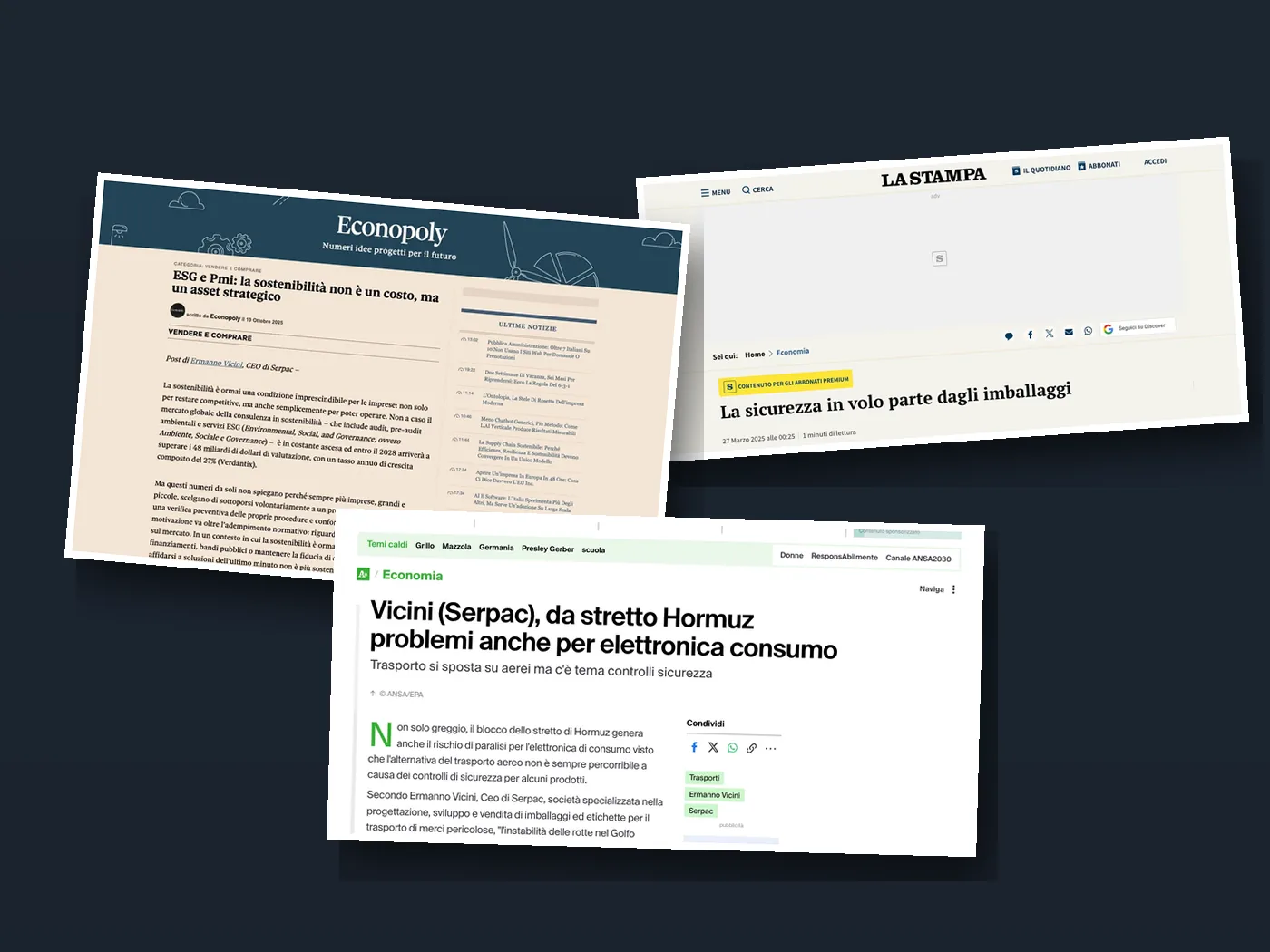
The news is
inside the work.
- Stories and materials
- We interview the people in your company, choose the stories with you and write press releases, bylined articles and materials ready for newsrooms, so the journalist already has the data and quotes they need to write the piece.
- Media relations
- We pitch each story to the journalist who covers that topic at each outlet, so your news doesn’t end up in a generic inbox. The newsroom decides whether to publish it.
- Events and coverage
- We organise events from the idea to the stage. In Deep Intelligence you can see all your coverage whenever you like, each article with its clipping, its link and what that space would have cost to buy as advertising.
What does the
press office include?
When a potential client meets you for the first time, they already know who you are, because they have read about you in a newspaper they trust. You can talk straight away about what they need, without first having to introduce your company. To get you to that first meeting, we pitch your company to journalists at the outlets your clients read.
Finding the news
Your company usually already has its news: data only you hold, a certification you earned before your competitors, a clear stance on the state of your industry. We find these stories by talking to the people who do the work every day, so you don’t have to invent an excuse to get into the papers.
Materials for newsrooms
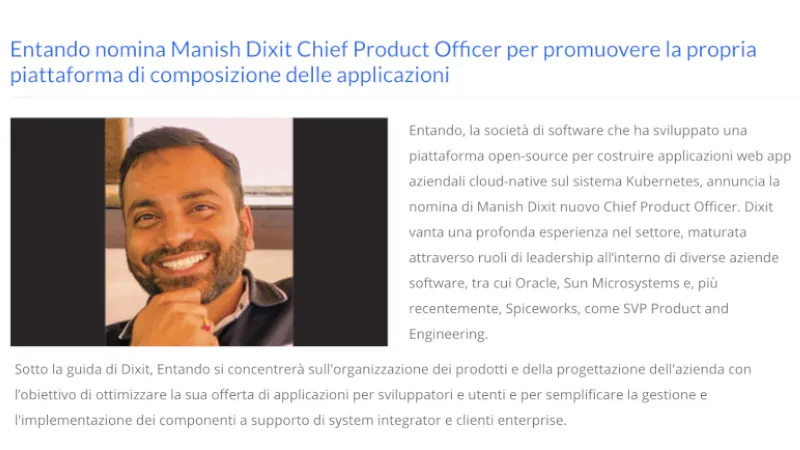
We prepare press releases, interviews, articles bylined by the founders, fact sheets and photos with you, and for each outlet we choose the angle of the story that interests its readers, so the journalist receives a story suited to their paper rather than the same press release everyone else gets. For Entando, the founder’s bylined articles carried the same idea into both business and technology media.
Media relations
We pitch your story to the journalist who covers your topic, at the most suitable publishing group. In Italy many daily papers belong to publishing groups, and when one newsroom publishes a story, papers from the same group in other regions often pick it up the same morning. That’s why we choose carefully which group to pitch your story to, so a story accepted by one newsroom can run in several papers of the same group.
Local and national press, print, TV and radio
- News agencies, such as ANSA and Adnkronos, which pass news on to dozens of outlets.
- National and local dailies, on newsstands and online.
- Trade magazines, the ones your clients and purchasing managers actually read.
- TV and radio, from Sky TG24 to RaiNews, when the story lends itself to a video report or an audio interview.
Interviews and sensitive moments
Before an interview we prepare whoever will speak to the journalist, so they know what to expect from the questions and say what matters for the company. If your company is going through a crisis, we help you decide what to tell journalists and when, so you don’t respond on impulse.
What we don’t do
- We don’t buy articles and we don’t pass off advertorials as news, because a paid article doesn’t carry the credibility of a story a journalist has chosen.
- We don’t use networks of sites built to host press releases, because they make the coverage list longer but nobody reads them.
- We don’t guarantee you a number of articles, because the journalist decides whether to publish. Anyone who guarantees you a number is selling you advertising space.
How the press office works,
step by step.
1. The twenty-minute call
Before the call we look at your website and at what newspapers and AI already say about you. In twenty minutes we work out together whether your company has a story newsrooms will care about. If there isn’t one, we tell you during the call, before you spend a single euro.
2. Interviews at your company
We interview the people who know the work: founders, technical staff, doctors, sales people. From those interviews we choose the topics to pitch to newsrooms and the people who will speak to journalists, so whoever speaks for the company really knows the subject.
3. The media plan
For each topic we choose the outlets to pitch it to, among news agencies, national dailies, local papers and trade magazines, and we decide how to tell it to each one. That way you know in advance which readers we want to reach. For Ingegneria Italia the plan included ANSA, Borsa Italiana, the national dailies and the newspapers of Padua, Vicenza and Brescia.
4. Materials, written with you
We write press releases, interviews and bylined articles with you and send them to newsrooms only after you have approved them, so journalists receive only what you have read. Pitching them well to newsrooms is our responsibility.
5. Working with newsrooms
We pitch each story to the journalists who cover that topic and stay in touch with them until they decide whether to publish it. When a journalist says no, we tell you and pitch the story again with a different angle or to another outlet, so a good story isn’t lost at the first rejection.
6. Every article in Deep Intelligence
We log every article in Deep Intelligence with outlet, date, link, clipping and estimated media value, meaning what that space would have cost to buy as advertising. You can open Deep Intelligence whenever you like and see what has come out, without waiting for a report from us.
7. After the first two months
The first project lasts two months and aims at a specific goal, such as a launch, an opening or an event. At the end of the two months you look at the articles, the outlets and their value, and only then do you decide whether to continue with several months of work on your industry.
How much does
a press office cost?
The quote depends on four things: how long the project lasts, which outlets you want to reach, how many materials you need and whether you want to organise an event. You pay a monthly retainer, starting from €1,650, that doesn’t change with the number of articles, so you know the cost before you start.
Duration
The first project lasts two months and focuses on a specific goal, such as a launch, an opening or an event. If your goal is to become known to the journalists in your industry, we plan the work over several months, because a newsroom learns to trust a company one story at a time.
Outlets
We work differently with news agencies and national dailies than with local papers or trade magazines. If you want to reach more markets or more industries, we follow more newsrooms and the quote grows accordingly, so you pay only for work on the outlets that serve your goal.
Materials
The number and type of materials to prepare, from press releases and interviews to articles bylined by the founders, fact sheets and photos, weigh on the quote as much as the outlets. In our press release guide we explain how to write a press release that a newsroom will read.
Events
If the project includes an event, we add the concept, the invitations, the venue management and the work with the journalists attending to the quote.
What you don’t pay for
You don’t pay per article and you don’t pay a percentage of media value. The journalist decides whether to publish, so we charge you for the work that depends on us: finding the stories, writing the materials and working with the newsrooms.
You receive the quote after the twenty-minute call, once we know whether your company has a story. If you first want to compare the press office offers on the market, read the press office guide.
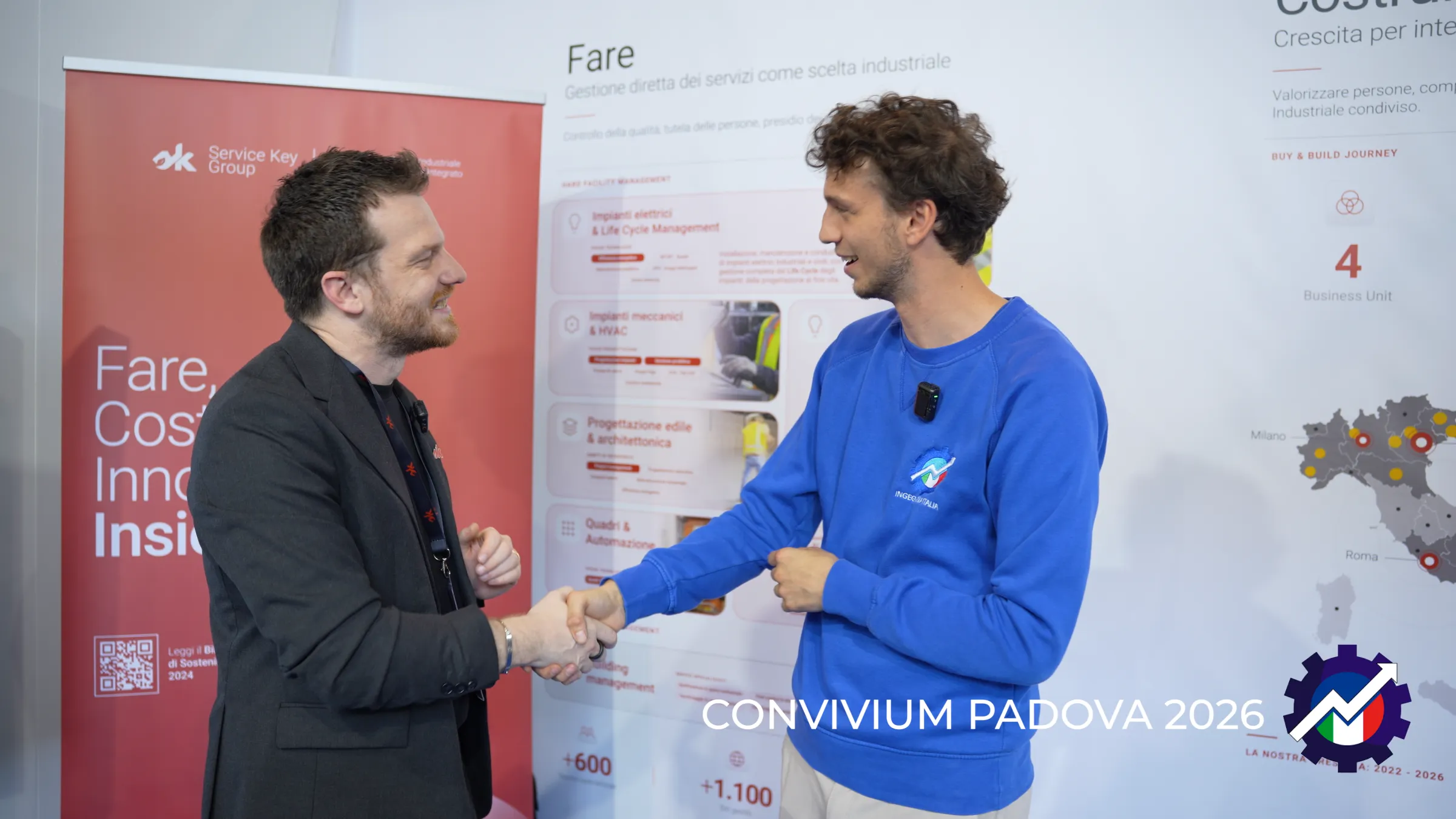
Ingegneria Italia
of preparation
We had ten days to prepare the press work for Convivium, Ingegneria Italia’s STEM event in Padua. At advertising rate-card prices, the space Ingegneria Italia earned in the papers would have cost ten times what it invested in the press office.
Figure from the published case study, specific to this project.
Events, from the idea
to the stage.
We organise the event within the same project as the press office: we come up with the concept, send the invitations to guests and journalists, manage the venue and follow the media coverage, so you don’t have to coordinate a separate events agency and press office. We design the event together with the press work, so we pitch it to journalists as news before it even opens its doors.
Noval Group, the brand launch in Naples
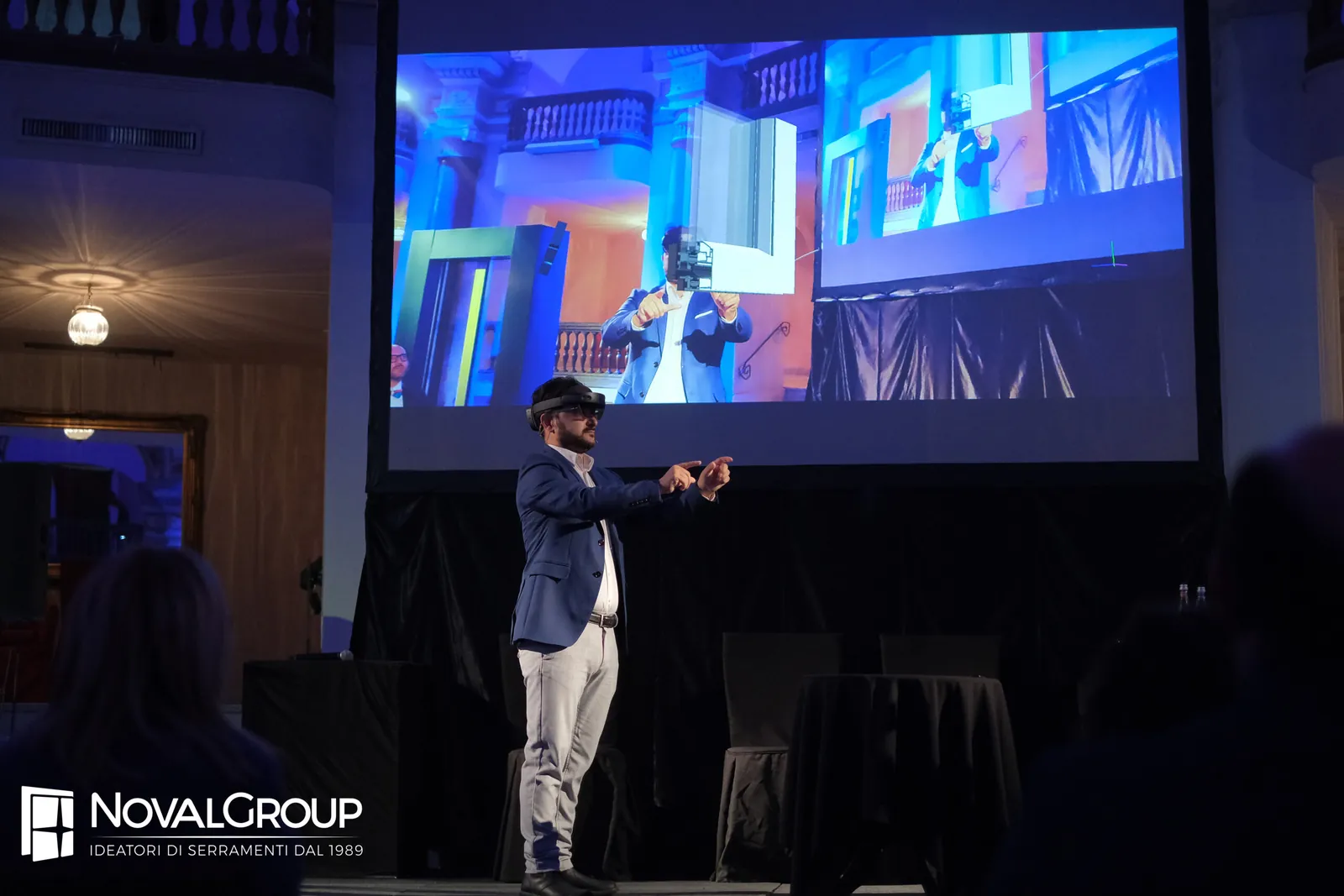
For Noval Group we conceived and organised the presentation of the new brand at the Teatro Salone Margherita, beneath the Galleria Umberto I, from the invitation to the stage. Around three hundred architects, designers, dealers and partners saw Noval windows and doors in augmented reality on the big screen.
Convivium, Ingegneria Italia’s event in Padua
Ingegneria Italia organised Convivium at the Padua Fair, and we handled the press work, starting with ten days’ notice. Three thousand people filled the hall, and news agencies, national dailies and local papers published the story.
The Longevity Suite, the brand celebration in Verona
For The Longevity Suite we organised the event in Verona that celebrated the brand.
Deep Intelligence
Press coverage,
always open.
In the Press view of Deep Intelligence you find every article with outlet, date, link and clipping, even when the article appeared only in print. Next to each article Deep Intelligence shows the estimated media value, meaning what that space would have cost at the outlet’s advertising rate card.
Deep Intelligence shows press coverage alongside site visits and campaigns, so you can see what happens on your site after an article. With the GEO package you also see how often AI cites your company. Virtual CMO reads this data and suggests our next decisions, for example which topics to push with newsrooms.
- Preview and link for every article, print included
- Estimated media value outlet by outlet, which remains an estimate and not revenue
- Month-by-month trend of your coverage
- A view to share with anyone in the company who wants to see the work

Who works on your
press office?
A senior team works on your press office, and it doesn’t send juniors ahead to make the calls to journalists. You talk to a single point of contact, who sets the calendar and priorities with you, so you always know whom to ask how the work is going.
Several specialists work with your contact: the people who handle relations with newsrooms, the copywriters who find the side of the story that interests readers, the people who organise events. For Genitore Informato, the people handling PR, the press office and the copywriters worked together, so newsrooms received stories ready to publish.
Before every important choice the team consults Deep Advisor, our internal archive of research and studies, instead of going on gut feeling. We bring you the decision with the reasoning behind it, so you can approve it and get started.
Why does press help SEO and GEO?
When they recommend a supplier, ChatGPT, Gemini and Perplexity draw their information mainly from sources outside the companies themselves, such as newspapers.
That’s why an article in an authoritative outlet carries more weight than a page on your own site saying the same thing. We coordinate the press office with our SEO, GEO and content service, which measures in Deep Intelligence how often AI cites your company, so you can see whether citations increase after you appear in the papers.
The press office also works well alongside digital advertising. For Serpac, Google campaigns reach people searching today for certified packaging, while the press office makes the topic known to those who will need that packaging tomorrow.
People who read an article about your company often search for your name next and land on your site. If the site is slow or doesn’t explain what you do, you lose that reader just when they are curious. With our websites and e-commerce service we build your site on DeepCMS, so it is ready for that visit.
Where the stories
came out.
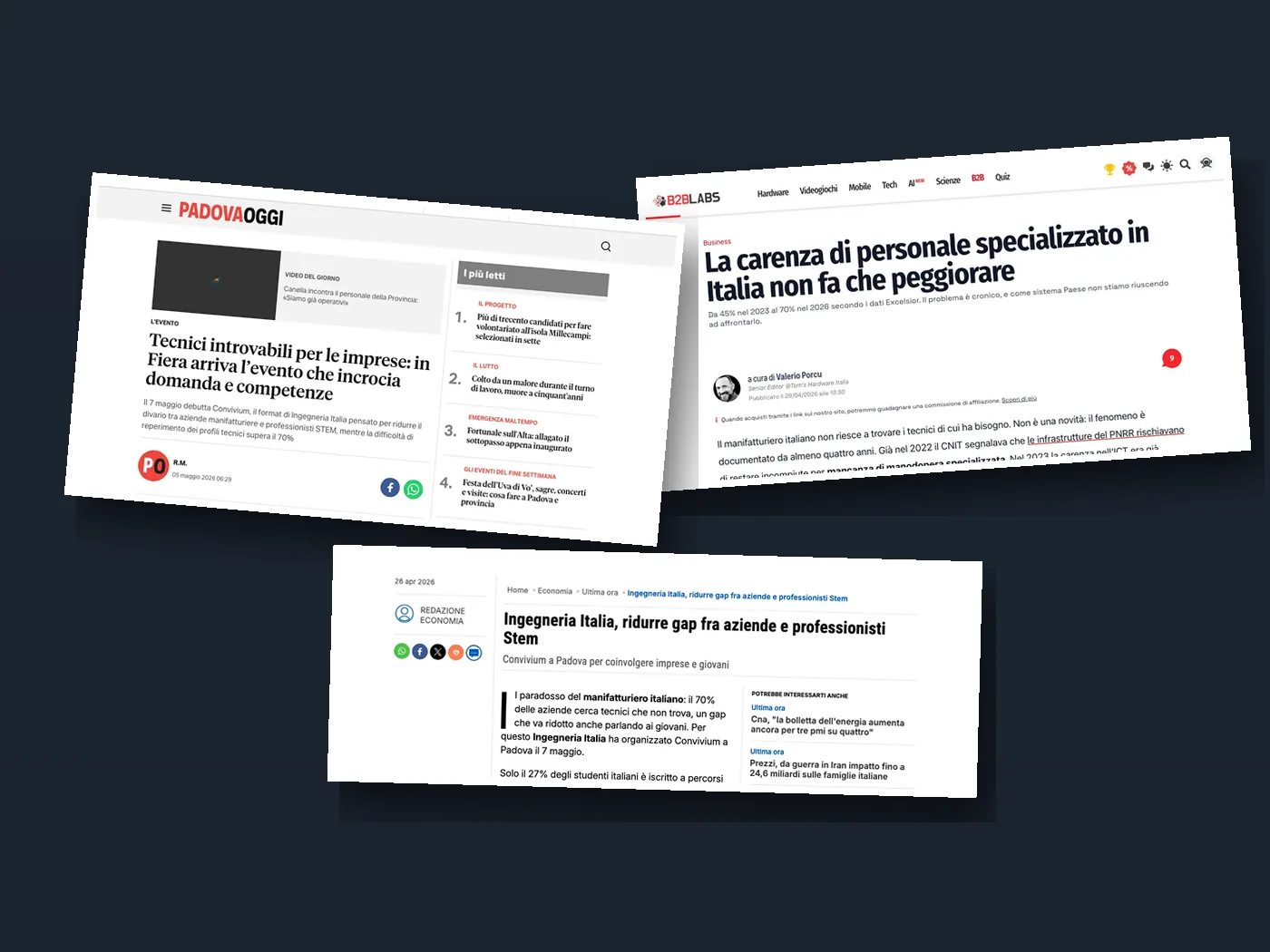
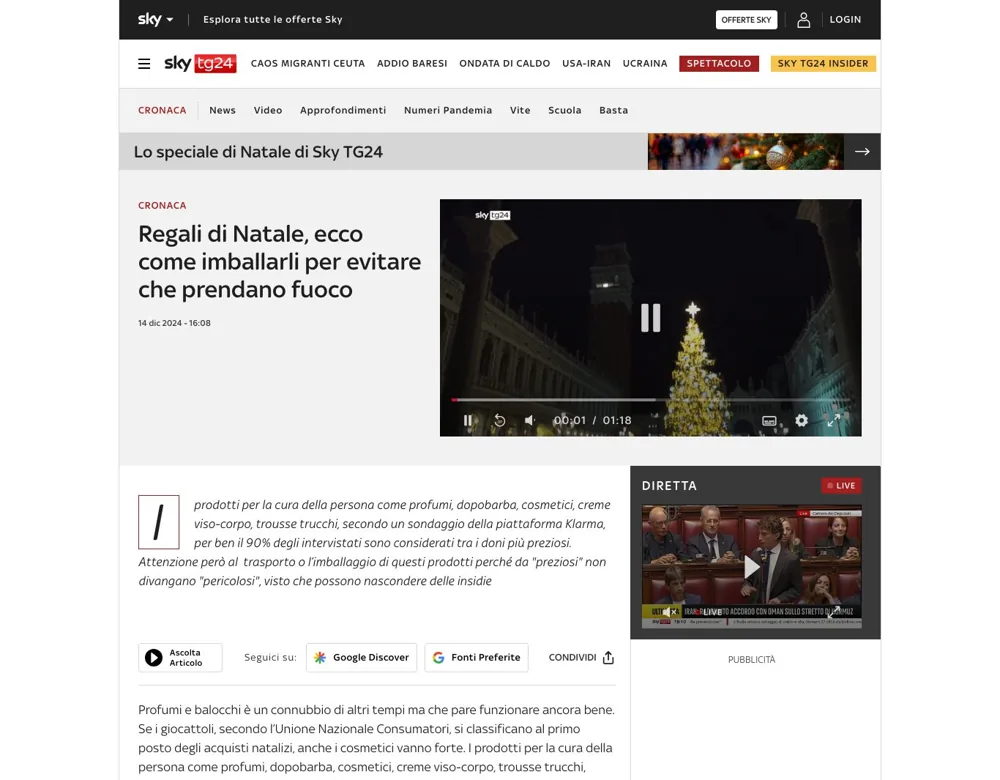
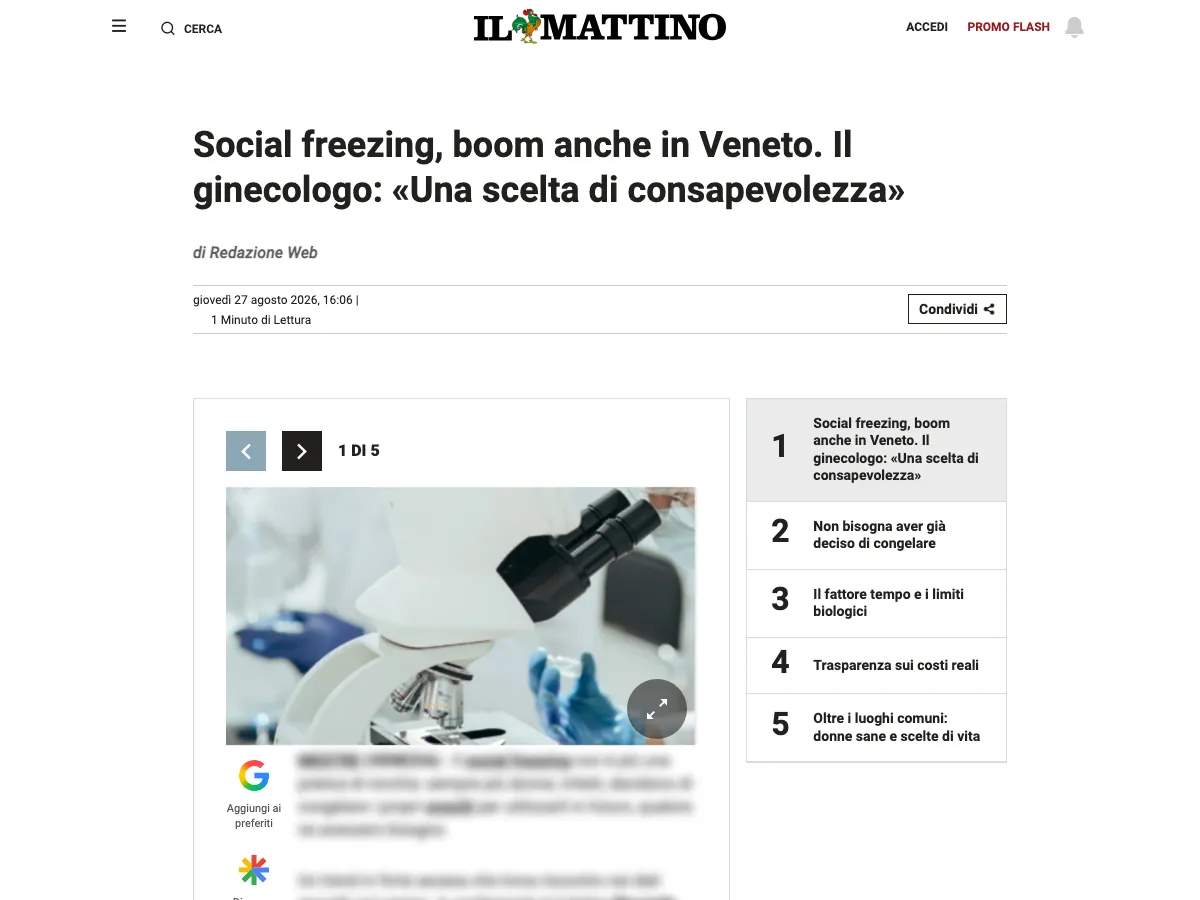
Some of the coverage we have earned for our clients in news agencies, dailies, trade sites and on TV, and two events: the Noval launch, which we organised, and Convivium, where we handled the press.

Questions
about the press office.
What does a press office do?
A press office finds a company’s news, writes it up in materials that newsrooms can use and pitches it to the journalists who cover that topic. We also handle interviews and organise events, and in Deep Intelligence you find everything that has come out in one place.
How does the Deep Marketing press office work?
We start with a twenty-minute call, where we work out together whether your company has a story. Then we interview your people, choose the outlets, write the materials with you and pitch them to newsrooms. You find every article in Deep Intelligence, and after the first two months you decide whether to continue.
How much does a press office service cost?
The retainer starts from €1,650 per month and depends on how long the project lasts, which outlets you want to reach, how many materials you need and any events. You don’t pay per article and you don’t pay a percentage of media value. You receive the quote after the call, once we have understood whether your company has a story.
What is the difference between a press office and PR?
A press office works with journalists: news, press releases, interviews and clipping. PR covers all of a company’s relationships with its public, so events, partners, institutions and industry communities as well. We handle press office and PR in the same project, so you don’t have to coordinate two suppliers who tell your company’s story in different ways.
Is a press office mandatory?
For a private company a press office is not mandatory: it is a choice, and it pays off when the company has news to share and wants to become known to customers, partners and investors. For Italian public administrations, Law 150 of 2000 provides for the option of setting up a press office.
How do you contact a newspaper’s newsroom?
Every outlet publishes its newsroom contacts, but a generic email often never reaches the journalist who covers your topic. We pitch the story directly to that journalist, with ready-to-use material written for the readers of their outlet.
Do you buy press coverage?
No. We don’t pay for articles and we don’t pass off advertorials as news. We earn coverage by pitching newsrooms stories that are useful to their readers. When a journalist turns a pitch down we tell you, instead of padding the report with sites nobody reads.
Can you guarantee how many articles I will get?
No, because the journalist decides whether to publish. We guarantee the work: how many stories we pitch, to which newsrooms and how often, so you always know what we are doing for you. Anyone who guarantees you a number of articles is either selling you advertising space or publishing your press releases on sites built specifically to host them.
Can we start with an event or a launch?
Yes. You can start with a launch, an opening, an event or ongoing work in your industry. We plan the activities around the story and your dates, so we pitch the story to journalists while it is still fresh.
Is my company too niche to interest newspapers?
Usually not, and it is the prejudice that holds back most business owners. Serpac sells certified packaging for dangerous goods and ended up on Sky TG24. Niche companies almost always have a story. The people who work there often don’t recognise it, because from the inside, data that only their company holds seems obvious. A twenty-minute call is enough to find out whether your story is there.
How do you measure press office results?
In Deep Intelligence you find every article with outlet, date, link and clipping, and next to it you see the estimated media value, meaning what that space would have cost to buy at rate-card prices. Media value remains an estimate and is not revenue. We recheck the links over time, so you can use the archive in a tender or on your website without running into broken links.
How long is a minimum press office project?
The minimum project lasts two months and aims at a specific goal, such as a launch, an opening or an event. If the numbers convince you, you renew it. If you want to become known across your whole industry, we work over several months. The call shows you which of the two routes suits you.
Do you organise events too?
Yes, we organise events within the same project as the press office: we come up with the concept, manage the venue, invite the journalists and follow the media coverage. For Noval Group we organised the presentation of the new brand at the Teatro Salone Margherita in Naples, from the invitation to the stage, in front of around three hundred architects, designers, dealers and partners.
Does the press office help you get cited by AI?
Yes, and today it is one of the main reasons to have a press office. ChatGPT, Gemini and Perplexity mainly cite sources outside the companies themselves, such as newspapers, so an article in an authoritative outlet carries far more weight than a page on your own site saying the same thing.
Let's talk about your project.
Tell us about your company and the work you want to start with.
Book a call