

Keep marketing in-house if the work requires you to be on the product every day or alongside the sales network. Outsource it if you need more skills than you would pay for with a full-time role. Choose the mixed model if you already have an internal manager and want to strengthen them. In all three cases your company approves the offer, the priorities and the budget, and the external point of contact coordinates the professionals and answers for the activities you entrust to them.
If you already have a marketing manager, the external team brings them the skills they lack and takes on the activities you have agreed. Your manager approves the plan with the powers you give them, and the external contact organizes the deliveries and brings you only the decisions that are yours to make. That way you keep the day-to-day product work in the company and hand campaigns, website or press office to outsiders.
What should your marketing department do?
Start from the decisions to make and the things to deliver. Your marketing department decides which customers to address, how to present the offer, which materials to produce and which channels to invest in. Then it looks after the website and reads the results. A good plan ties each of these activities to the company's goals and to the work your sales network can actually follow.
You can hand campaigns, content, visual identity, website and press office to an outside team, all together or only the ones your project needs. First decide who controls the product information, who approves the materials and who answers sales inquiries. That way a campaign starts with the page already ready, and the salesperson knows which offer the customer calling them has seen.
To choose the supplier, there is the guide on how to choose a marketing agency. Here we look at how to split the work among the people you have chosen.
When does in-house marketing make sense, and when outsourcing?
- In-house department. It makes sense when the work requires you to be on the product every day, in the stores or with the sales network. You decide who runs the department, which skills you hire and which you buy outside.
- Outsourced department. It makes sense when you need more skills and want a point of contact who coordinates the agreed activities. Write down which decisions the supplier makes and which you keep.
- Mixed model. It makes sense when you have an internal manager who needs extra hands or skills. Establish who decides the priorities and how the two teams pass materials, data and deadlines to each other.
The table compares the three models on the questions that decide the choice.
| Model | When it makes sense | Who decides the priorities | What you write down before starting |
|---|---|---|---|
| In-house department | The work requires you to be on the product, the stores or the sales network every day | The internal manager, with management | Which skills you hire and which you buy outside |
| Outsourcing | You need more specialists than you would keep full-time | Your company, on the external contact's proposal | Which decisions the supplier makes and which you keep |
| Mixed model | You have an internal manager who needs extra hands or skills | The internal manager | How the two teams pass materials, data and deadlines to each other |
An internal department gives you continuity and knows the company from the inside. Outsourcing brings you the specialists it would make no sense to hire full-time. When you compare costs, count the work that stays with your people as well as the agency's fee. In the guide to agency costs you will find the items to compare.
If your product changes every day and needs immediate decisions close to production, you need a person in the company. Next to them you put a partner for advertising, website or press, and you keep the direction of the function in-house.
Who decides and who answers for the work?
Appoint a contact in the company who collects information and gets approvals. If every department gives the supplier different instructions, the contact gets everyone aligned before the team produces the materials, so nobody does the same work twice.
The external manager organizes the agreed activities, assigns the work to the specialists and brings you the obstacles and the decisions that are yours to make. Ask for their name, who stands in for them and when they involve management. A single point of contact is useful when they really coordinate the work and don't just act as a switchboard.
- Goals and budget. Your company approves investments, priorities and financial constraints. The external partner proposes the plan and explains resources, alternatives and limits to you.
- Product and offer. Your company confirms features, availability, prices and terms. The external partner turns this information into messages and materials the customer understands at once.
- Production and publishing. Your company provides the materials and approves them within the agreed times. The external partner produces, checks and delivers.
- Sales inquiries. Your company assigns the contacts to the salespeople and records the outcome of every negotiation. The external partner checks with the salesperson where the inquiries come from and how much they are worth.
- Evaluating the work. Your company shares the sales data and the operational constraints that matter. The external partner explains the results, the work done and the changes it proposes.
If you also buy the marketing direction, write in the contract who takes that role and which decisions they make. Whoever runs the function answers for the choices, not just for the deliveries.
How do you connect marketing and sales?
Before starting, decide with the team what makes a good inquiry: territory, type of customer, need, product and spending capacity. Sales knows who receives the inquiries and how quickly to respond. Marketing knows why a negotiation moves forward or stalls, and uses that information to correct the campaigns.
Look at the whole path, from inquiry to sale. If contacts arrive from outside your area, the team changes the messages and the distribution of the ads. If the inquiries are good but nobody responds, intervene first on the sales organization. To tell which of the two problems you have, look at the negotiations and not only at how many forms arrived.
That is why whoever handles digital advertising management works together with whoever sells and whoever looks after the company website. The press office works on news and relationships with editors, and gives you coverage you can show to customers. Decide with the team how to use it in the sales materials, and measure it for what it is, separately from contacts and sales.
How do you start the project?
- Define the need. Write down what you have to achieve, for whom, in which markets and by when, and list the activities you already cover in the company.
- Ask for a proposal on your case. Have them spell out deliverables, people involved, costs, dependencies and approval procedures. In the first call the team frames the problem, and the in-depth study starts with the real work.
- Organize access and materials. Decide who shares accounts, content, data and sales information, and give each person the access their role needs.
- Set the starting point within the first month. The team describes the initial situation and states the criteria it will use to read the changes, so you know from the start how you will judge the work.
- Start the activities and check the deliveries. The contact updates you on deadlines and obstacles, and you and the supplier discuss the results looking at the same data over the same period.
Before signing, set the minimum term, renewal, notice period and final handover. Also write down how work and fee change if you add activities or markets later, so you can widen the project without renegotiating everything from scratch.
What do two real Deep Marketing projects show?
In the Genertel and Genertellife project, Deep Marketing worked alongside the in-house digital marketing office. It managed Google Ads in coordination with the media center, analyzed the data and trained the management and one member of the team. It is the mixed model at work: an existing department taking on outside skills where it needs them.
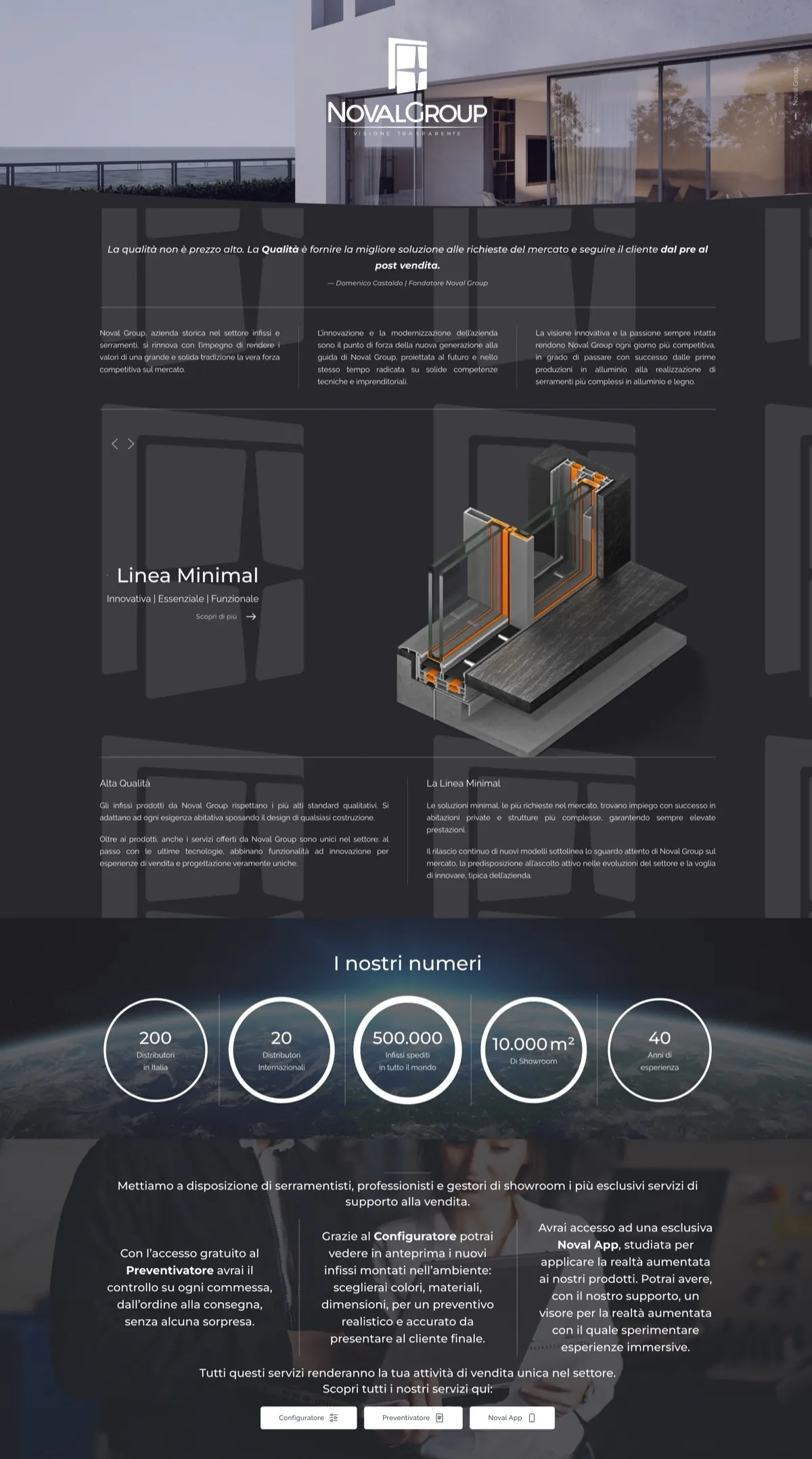
The Noval Group project brings together visual identity, website and brand presentation. Look at the materials and applications, and you see what it means to have a team that coordinates different disciplines on the same brand.
What do you ask of an external marketing department?
Ask who will follow you, which activities the project includes and how the contact works with your people. Have them show you examples close to your case, and have them write down what you receive when the relationship ends: accounts, content, data, export formats and delivery times.
With Deep Marketing you hand the services included in your project to an external team and speak with a single point of contact. The project sets the activities and the way we work with your team, and the marketing direction, if you want it, enters the contract as an explicit item.
If you work in Veneto, the page on the agency in Verona tells you how we are present in the area. To check an agency's evidence and reputation, use the criteria on the page about choosing the best agency. At the first meeting, bring the deliverables you want to obtain and the tasks you want to keep in the company, so the proposal starts from your case.
Frequently asked questions
How much does an outsourced marketing department cost?
The price grows with the activities you hand over, with the number of specialists working on the project and with the length of the engagement. When you compare it with an internal department, count the work that stays with your people as well as the agency's fee. In the guide to agency costs you will find the items to compare.
Who decides in an external marketing department?
Your company approves goals, budget, offer and materials. The external contact proposes the plan, coordinates the specialists and brings you the decisions that are yours to make. If you also buy the marketing direction, write in the contract who takes that role and which decisions they make.
Can I outsource only part of my marketing?
Yes, and that is the mixed model. Keep the day-to-day product work in the company and hand campaigns, website or press office to an external team, with clear rules on who decides the priorities.
What do I keep if I end the relationship with the supplier?
You keep accounts, content, data and files. Before signing, have export formats, delivery times, minimum term, renewal and notice period written down, so that on the day you close you lose nothing.
PS: the cover image is generated with artificial intelligence.