Olimpias Group
Substance has a voice.
Sustainability inside the industrial work, then inside the company’s story. A project to make a concrete heritage visible.
- Corporate communication
- Sustainability
- Content strategy
- Digital marketing
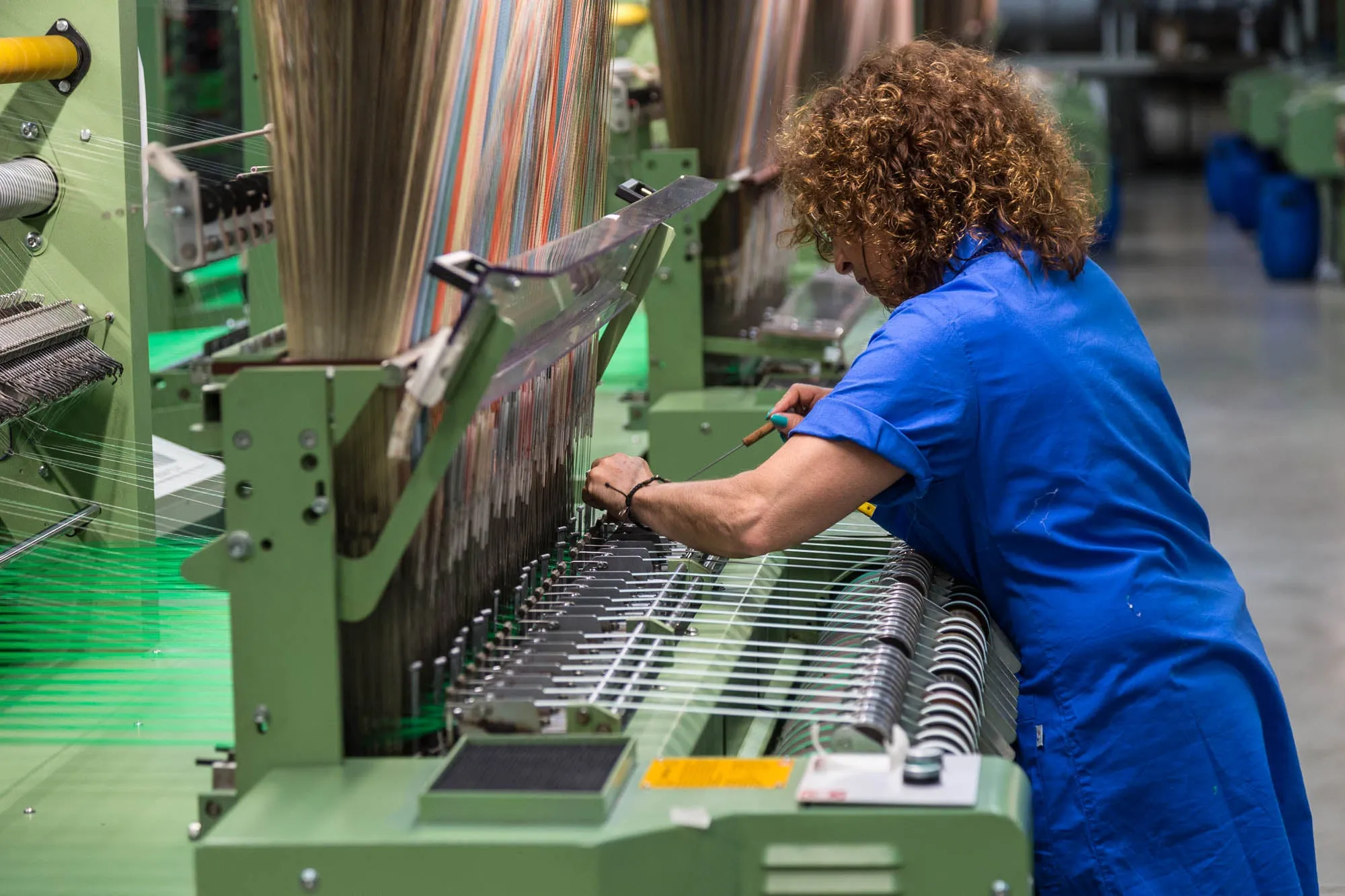
The value was there.
Processes, certifications, environmental results measured year after year: the substance of the project was already in Olimpias’s work. What was missing was a form that could carry it to people who do not see that work every day.
A textile group
that dresses other brands.
Olimpias Group was born in 1982 from the production expansion of the Benetton world and is now controlled by Edizione, the family holding company. The group reports 12 plants in Italy and abroad, more than 3,000 employees and revenue close to €400 million, across three divisions: Yarns in the Prato district, Fabrics, Labels.
More than 80% of revenue comes from third-party clients: Giorgio Armani, Diesel, Prada, Hugo Boss, Tommy Hilfiger, Lacoste, Inditex. Olimpias is a part of the fashion industry the public does not see, and that buyers know very well.
Sustainability
built into the plants.
Sustainability at Olimpias is not a recent chapter. The group holds GOTS, OEKO-TEX Standard 100, OCS, GRS and RWS certifications and ISO 9001 and ISO 50001 systems, and has signed up to the ZDHC protocol and the Greenpeace Detox campaign.
Then there are the plants. With WASATEX, which the company describes as the first application in Europe, it recovers about 70% of the water used in dyeing and finishing. According to the group’s data, solar power avoided 3,283 tonnes of CO2 between 2011 and 2020, and cogeneration saved 7.6 million cubic metres of methane between 2009 and 2020.
Two audiences,
the same facts.
The assignment was the corporate communication project on sustainability. Those results were known to a small circle of textile buyers and almost unknown outside it. To fashion brands they had to say that Olimpias is a supplier on which to build their own environmental promises. To institutions and stakeholders, that it is an example of Italian industry that works.
The choice was to let the numbers speak. The content strategy turns technical data into readable pages, corporate communication puts sustainability inside the company’s story instead of in an appendix, and digital takes that content where the two audiences look for it.
The sustainability
manifesto.
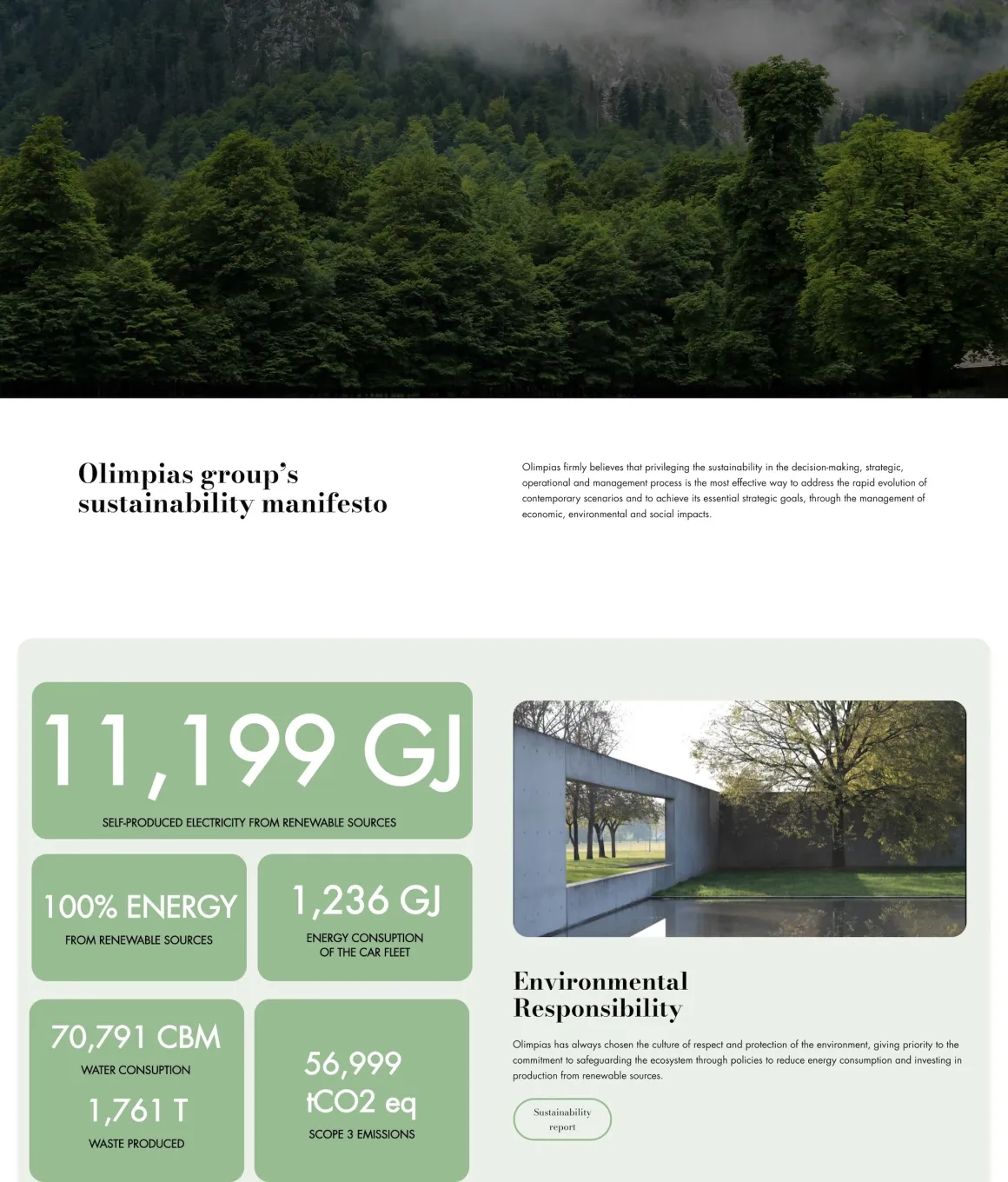
The result can be read on the dedicated page of the site: a statement of principle at the top, then the data one per box, self-generated renewable energy, consumption, water, waste, emissions. Behind it, the sustainability report for anyone who wants to check.
A page a buyer can forward to their sustainability office as it is.
